In this article
From kitchen counters to the baby’s room to your dining room table, nothing seems to be off-limits in a cat’s world. Cats somehow manage to be everywhere you’d rather they didn’t be, and training them to stay off certain areas can be nearly impossible.
If you have a cat that’s always in the wrong area of your home or all over the furniture when they shouldn’t be, you don’t have to lock them up or get rid of the precious space permanently.
There are many ways to make your off-limit areas unattractive to cats both naturally and quickly, whether they’re an outdoor or an indoor-only cat. Check them out.

Items You Can Use to Keep Cats Away
- Pet Deterrent Spray: Commercial cat deterrents are often in the form of urine or other predators’ waste, a scent that puts off cats.
- Natural Deterrents: Fruits and herbs like citrus, cinnamon, mint, lemongrass, orange peels, and lavender emit a scent that cats hate and can be the best deterrent to keep them off of surfaces.
- Double-stick tape, aluminum foil, and chicken wire mesh have textures that are unpleasant to cats.
- Water: Cats hate water, and you can use that against them.
- Loud noises

How to Keep Cats Out of the Bedroom & Other Rooms
There are many reasons why you would want a cat to stay out of rooms. For example, this could include having a baby and needing a good night’s sleep without interference, them destroying furniture, a family member having allergies, or maybe you just want a part of your house to be cat-free.
However, denying your cat access to a room may create stress and inadvertently make the pet shift this behavior to another part of the house. Be prepared to deal with this at least for a little while, and plan ahead to avoid further destruction. Know that, eventually, the cat will get used to the idea that certain areas are off-limits if you stick to your guns and remain consistent. Here’s how to do it.
1. Shut the Door

Of course, keeping the door shut is the obvious choice and an effective one. You can do this by acting fast and closing the door behind you quickly.
However, though it provides a physical barrier, a cat may not give up easily and may still try gaining entry by scratching the door and meowing loudly. Plan ahead to protect your door and know that, eventually, the meowing will stop.
2. Create a Physical Barrier
Similarly, you can create an alternative barrier if the room has no door. However, cats are agile climbers, and it may be hard to develop a physical gate that keeps all cats out. You can still try to design one according to your specific cat’s agility, though.
3. Place a Deterrent at the Door
If you want your cat not to annoyingly scratch and meow at your door, try sitting a motion-activated spray canister at the door. Once the feline approaches the door, the motion detector picks it up and sprays at the cat, not harming but frightening them.
Your cat will learn to associate the door with an unpleasant experience and keep off the door. Just be aware that such devices detect motion, so they will also go off if you or other family members pass by.
4. Feed & Play With the Cat Before Bed

A tired and well-fed cat is a sleepy cat. Engage them in an active play session to help them burn off excess energy and then feed them well. This mimics the natural work of hunting prey before eating behavior and will help get them sleepy and keep them out of your bedroom.
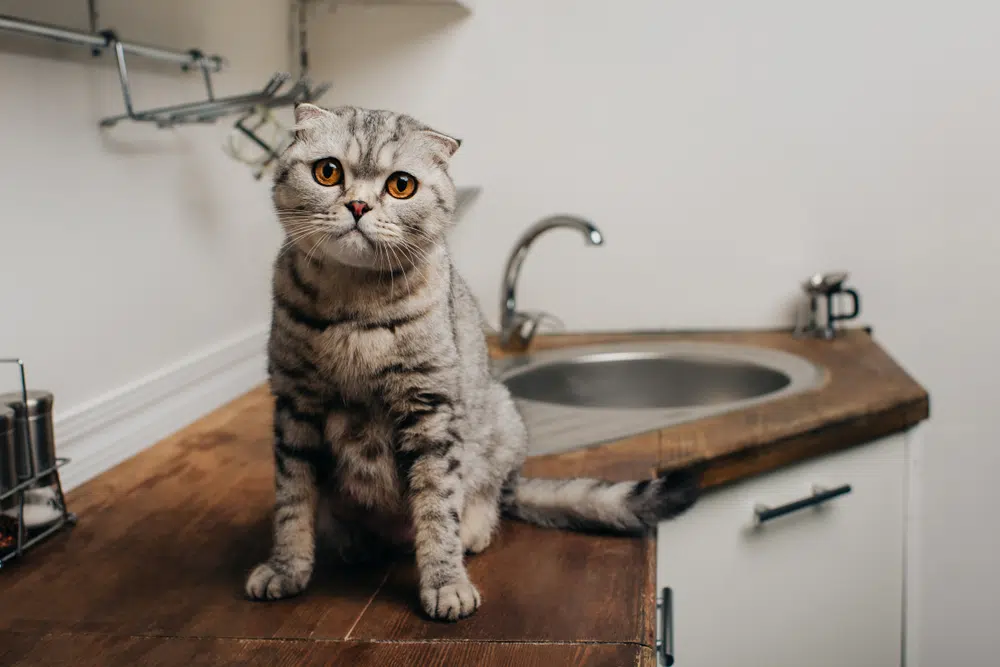
How to Keep Cats Away From the Kitchen Counter
A cat that “counter surfs” could be at risk for getting burnt and ingesting residue from cleaning supplies. This also exposes you to unsanitary issues when their fur gets into food or when it spreads bacteria from their dirty paws to your kitchen counter and eventually your food.
It is natural for felines, as they do love heights, and your kitchen counter and window sills offer that. Here’s how to keep them off your kitchen counters permanently.
1. Place Sticky Tape on the Counter’s Edges
A strip of sticky tape or crinkled aluminum foil along the edge of the counter is the real deal. Cats hate the feel of these materials on their feet, so the tape’s stickiness and the noise from the aluminum foil may discourage your cat after one or two tries. The problem is that this method may disrupt how you utilize your counter and could be wasteful as you’ll have to reapply the tape indefinitely. A good tip is to get a piece of cardboard or another surface covered with these items and simply place them on the counters and remove them as needed.
2. Keep Your Countertop Clean
Cats are naturally curious, and any set of keys and food crumbs will capture their attention. Therefore, it is best to remove some of the temptations and lessen your cat’s interest in exploring the countertop by keeping it clear of clutter.
You can also simply shut the cat in another room until you finish cooking if they insist on jumping on when you are trying to make food.
3. Address the Faucet

Some cats leap onto a countertop because they like drinking water at the faucet. Know that looking for fresh, running water is a natural behavior for felines. The best solution is to offer them a source of clean, fresh water specially designed for them, like a cat drinking water fountain.
4. Spray Some Natural Deterrents on the Counter Top
Kitchen counters smell great, thanks to the tempting foods like raw chicken, ground beef, or casserole you prepare on them. Spray it with unpleasant scents from foods like citrus and orange peels from your kitchen to prevent the cat from jumping up onto the counter.
5. Provide Alternative Suitable Climbing Spots

Invest in cat trees, perches, or cat shelving, or build a tower for your furry friend. Climbing higher spots is part of their innate instincts, and providing your cat with some designated climbing spot can hold their attention.
Pet, praise, and reward your kitty when they use the spots, and even spice it up by hiding a tasty treat at the top.
6. Use Clicker Training
Positive reinforcement could be an option, too. Offer your cat an alternative and safe kitchen space, such as a designated cat shelf, and offer them some of their favorite treats or other rewards whenever they use that place instead of trying to jump to the counter.
Have a clicker handy and make the sound whenever they are jumping onto the shelf, then offer them a treat and some pets. The cat will soon associate the sound with the reward, and you’ll be able to enjoy a cat-free counter.
How to Keep Cats Away From the Garden
Cats may prefer your garden due to curiosity, establishing territory, feeding, or mating. Whether you are training your cat, discouraging a neighbor’s cat, or dealing with a feral feline, keeping a cat out of your yard can be pretty challenging, mainly because these animals have incredible climbing and jumping skills.
These animals can damage the garden if they begin munching on your crops, digging the ground, or worse, urinating or pooping on the plants.
Here are a few approaches to stop cat intrusion in your garden.
1. Plant Cat Repellants

A cat’s nose sensitivity is high, so if your garden has odors that offend cats, you might succeed in keeping them away. Utilize the odor barrier technique by planting cat repellants in your garden surrounding your main food to discourage the kitties from accessing the area.
You can grow the crops in the spring to allow you to use the repelling properties all summer long. But in the fall, you might be able to use dry leaves and sprinkle them in your garden.
Rosemary, rue, eucalyptus, lavender, citronella, and pennyroyals are some of the plants you can try. You can also use the peels of citrus, such as oranges, limes, grapefruits, lemons, and even ground tobacco, to deter cats.
2. Use Water Repellant Techniques
Water can be the easy way out for you, especially since cats hate water. Try squirting cats with water using a motion-detection water sprinkler, which ensures you catch cats in the act to establish the notion that gardens are a no-go zone.
But keep in mind that these sprinklers will go off when detecting motion, so ensure you and your family members are aware of it.
3. Use Sound Barriers

Cats have a more robust auditory sense than humans and tend to hate sudden or loud noises. For this reason, use sonic devices, which emit high-pitched ultrasonic waves that are inaudible to humans but unbearable for felines.
Install the device facing the garden, and once it senses the intruder approaching, it’ll give off the pitched sound and scare off the animals.
Other materials like marbles and pebbles in an empty metallic can, wind chimes, or a sensitive bell can work too. However, you would need to surprise cats in the act for them to be effective.
4. Try a Commercial Cat Repellent Spray
Commercial cat repellent sprays can also keep cats from your garden because they use odor barrier methods. These sprays mimic the smell of urine and waste from predators, namely coyotes, foxes, and bobcats.
5. Remove Cat Scent From the Garden

Cats will mark their territories using their scents and identify with your garden as long as it has the cat scent. For this reason, you should clean your garden and remove cat poop, including the top layer of the soil. It’ll also allow you to get rid of urine.
Getting rid of poop and urine seems like hard work, but baking soda can help. The good thing is that a little bit of baking soda isn’t harsh on plants, so you can sprinkle a small amount on your plants and soil to neutralize the scents. Do not overdo it though, as too much will have a negative effect on your plants by changing the pH of the soil and environment.
6. Physical Barriers
You can use chicken wire on top of your soil or mulch across your planting plots before planting. Felines hate the feel of chicken wire or bristle mulches under their feet.
Suitable materials for mulching purposes include sharp-edged pine cones, eggshells, or stone mulch. You can also find spiky cat mats that are easy to install around your garden’s perimeter. These rough materials will put cats off and discourage them from lounging, digging, and pooping in your garden.
You can also run a fence around your garden. However, an electric wire fence might be too extreme and endanger the animals. Instead, try a humane option like using the techniques of keeping rabbits out of gardens.
7. Designate a Cat-Friendly Area

If you want the cats around but not in certain areas of the garden, strike a compromise. Provide a better space, like a comfortable spot to lounge in like a separate bed with catnip, cat thyme, cat grass, or other appealing plants, or a sandbox in one of the yard’s small corners.
Most cats go crazy over catnip, so be sure that they’ll make the designated area a private sanctuary and favorite hangout spot. On the other hand, a sandbox can be a magnet for cat feces, so this might not be the best idea if there are many other cats around your neighborhood.
8. Keep Your Garden Clean
Make your yard, garden, and property unattractive to cats by cleaning and decluttering. Bins full of food and carelessly thrown pet bowls will attract stray and wandering cats, and it might also attract racoons, skunks, and other wildlife present in your area.

Conclusion
All these methods require patience and consistency, but if nothing seems to work despite the effort and consistency, you may want to call in a cat behavioral therapist. The practitioner will assess your home and devise behavior modification techniques to help keep your kitty off certain areas. If what you are dealing with are other cats on your property, a physical barrier might be your best bet.
You might also like:
Featured Image Credit: LightField Studios, Shutterstock