Get

In Your Inbox

Catster is reader-supported. When you buy via links on our site, we may earn an affiliate commission at no cost to you. Learn more.

How to Stop Older Cats From Eating Kitten Food: 6 Vet Approved Tips

Share

Cute cat eating on floor at home

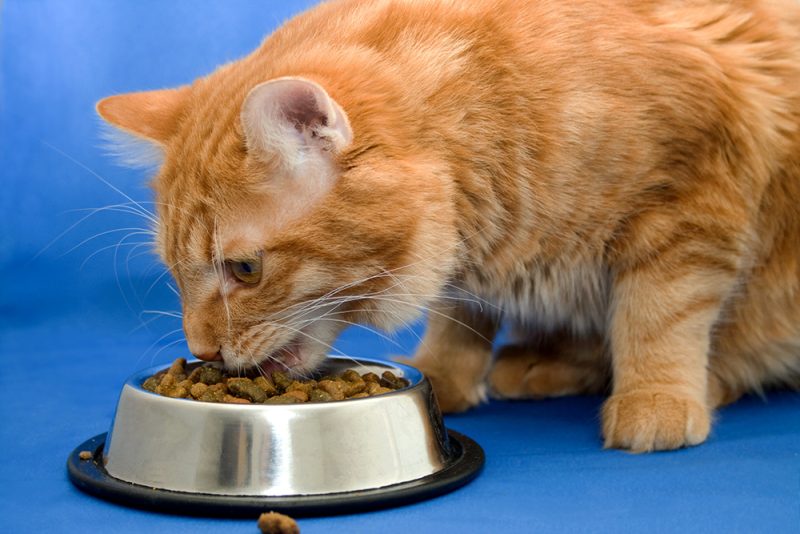
It’s common for older cats in your home to react unpredictably to a new kitten, like an older sibling adjusting to a baby in the house. Unfortunately, it sometimes comes with problems, like your older cat trying to steal the protein and fat-rich kitten food. Sometimes they just like the taste, crave extra nutrients, or even may be asserting dominance over the new little feline in the house.

Either way, it can become a big problem when your older cat literally won’t leave the poor kitten’s food alone. Read on for some ways you can fix the situation and help both cats get into a healthy feeding routine.

divider cat faces oct 2024

Top 6 Tips to Stop Older Cats from Eating Kitten Food

1. Understanding Why Your Older Cat Eats Your Kitten’s Food

Older cats have different nutritional requirements than kittens. Broadly speaking, kittens need more nutrient-dense food to fuel their muscles, eyes, and other major organs that are rapidly developing. Mature cats don’t need as many of these essential nutrients and do best on a maintenance diet with similar proportions but lower total amounts of these nutrients. When your older cat eats kitten food, it can throw their body out of balance and cause issues such as obesity, which can lead to secondary issues such as arthritis.

As mentioned above, there are a few major reasons why your adult cat might be scarfing down your new kitten’s food. Let’s highlight each in a quick list right below so you can understand your cat’s motivation better.

Possible Reasons for Stealing Kitten Food:
  • Nutritional deficiency: Cats lacking essential nutrients like protein, fat, taurine, or vitamins may be drawn to your kitten’s nutrient-loaded food, and you should consult a vet for more info.
  • Dominance: Most common when food is limited, an older cat might display dominance over the new kitten by eating their food and “guarding” essentials, like the litter box.
  • Preference: It’s possible your older cat simply discovered the tasty joys of kitten food and there’s no serious underlying problem.
siamese cat eating food from bowl at home
Image Credit: Pixel Shot, Shutterstock

2. Separate Feeding Areas

The most effective way to solve this problem is to fully separate your older cat from your kitten during feeding times—no access, no problem. This can be done through a few methods, depending on your home’s layout and how far you’re willing to go. Let’s check out some specific ways you can go about this just below.

Tips for Feeding Cats in Separate Areas:
  • Try putting each cat’s food and water bowls on separate ends of the room. You’d be surprised how often that works to solve the problem!
  • Use baby gates to fence off separate feeding areas.
  • Cut a flap into a box that’s just small enough for your kitten but not your older cat and use it as a feeding station.
  • Feed your cats in completely separate rooms. This is pretty radical and won’t solve your problem long-term but works as a short-term fix.

3. Maintain a Strict Feeding Schedule

Over time, it may be worth concocting a feeding schedule where your kitten and older cat eat at completely separate times of the day. This way, your older cat will be full when your kitten eats instead of both kitties being hungry at the same time. Both kitties being hungry at the same time greatly increases the chances of kitten food poaching, so let’s fix that with a more regimented feeding schedule.

You should already be feeding your kitten smaller meals more frequently than the older cat, but stagger their mealtimes apart. For example, feed your kitten their meals an hour before or after your older cat. This can take some fine-tuning as you figure out a whole schedule and as your cats acclimate to the new feeding routine, but in the long run, it’s a great way to remedy your issue and promote feline harmony.

Man holding bowl with feeding for his hungry domestic cat
Image Credit: Jaromir Chalabala, Shutterstock

4. Try Automatic Microchip Feeders

A more high-tech method to stop food stealing is to invest in microchip pet feeders. These miracles of modern tech only dispense food (dry or wet) when a certain pet’s microchip or RFID collar tag is detected. This way, each pet has their own dispenser with the appropriate type of food. It doesn’t fully prevent your older cat from pushing your kitten out of the way once the food comes out of the feeder, but it certainly cuts down on the chances of that happening.


5. Engage Your Older Cat With Puzzle Feeders

Another possibility is that your older cat is feeling a little unsatisfied with their dining experience. To help engage their mind and keep them mentally occupied during mealtime, you can try using puzzle feeders. There are many different types, from maze-shaped bowls that promote slower eating to mouse-shaped pouches you hide around the house with kibble inside. Try mixing and matching them to keep your cat’s interest and, hopefully, prevent them from stealing the kitten’s food.

cat playing with an interactive puzzle toy
Image Credit: Maximilian100, Shutterstock

6. Consult a Vet

It’s possible that your older cat is suffering from a nutritional deficiency that makes them crave the nutrient-packed kitten food. If their stealing persists, the culprit could be a serious medical condition that needs to be addressed sooner rather than later. We suggest visiting a vet, who can run tests to see if your older cat is deficient in any major nutrients, thus making them crave the kitten food.

If you need to speak with a vet but can't get to one, head over to PangoVet. It's an online service where you can talk to a vet online and get the advice you need for your pet — all at an affordable price!

PangoVet_Mention-in-Content for PangoVet2 save money

divider cat faces oct 2024

Conclusion

It’s always concerning when your adult cat is constantly trying to steal your kitten’s food, but it’s far from an insurmountable problem. The most accessible ways to do this are to separate your feeding areas or use a microchip feeder, but many other solutions also exist.


Featured Image Credit: Africa Studio, Shutterstock

Want content like this delivered to you?

Sign Up For Our Newsletter

News, insights, expert advice, and everything cat

* By submitting, you agree to our Terms & Conditions and Privacy & Cookies Policy.


How useful was this post?

Click on a star to rate (you can leave written feedback after clicking submit)

Help us improve Catster for pet parents!

Your feedback really matters.

What did you like about this post? Also how can we improve it?

Join the conversation

Leave a Reply

You’re very welcome to leave a comment or question. Please know that all comments must meet our community guidelines, and your email address will NOT be published. Let’s have a positive and constructive conversation.


Catster's Digital Magazine is Back!

Vet-approved health & behavior advice

Real cat stories & community features

Vets Urge Owners: Don’t Ignore Sweet Smell Coming From Cats

Cats are not particularly known for having a pleasant aroma. The occasional whiff of fishy cat breath and that unmistakable post-litter-box scent simply...

“A Cat Spay Costs How Much???”

America has a kitten problem. Every day, thousands of cats and kittens are abandoned, surrendered, or discarded. Those who are lucky enough to...

Ask Dr. Paola – Help! My Cat Is Seeking My Attention! (June 15, 2026)

Welcome to our “Ask Dr. Paola” series, where every Monday we bring expert advice straight from Dr. Paola Cuevas (MVZ) to help our...

Everything I Need to Know About Cartoon Comedy, I Learned From My Pets

If you’ve ever looked at your cat doing something ridiculous and thought, “There has to be a joke in that somewhere,” Scott Metzger...

More related

Is Your Cat a Vertical Pee-er? What to Do & How to Help (Vet-Reviewed)

Cats can develop strange habits that leave us feeling perplexed. One such strange behavior is vertical peeing. Cats can start to pee vertically...

6 Vet-Verified Facts About Cat Pee

Felines are obligate carnivores, consuming animal-based proteins for the bulk of their diet. That’s significant because it plays a direct role in our...

Is Anthurium Toxic to Cats? Vet Approved Facts & FAQ

It’s important to know what kinds of plants pose a toxic threat to our pets. Cats in particular are known for messing around...

Diet for Cats With Cancer: Nutrition & Considerations (Vet Answer)

It’s the word that no cat owner wants to hear: cancer. While cats are living longer than ever, that longevity comes with an...

Keep reading

Can Cats Eat Hamburgers? Vet-Approved Feline Treats

Cats are meat-eaters, and what is more carnivorous than a juicy burger made with ground beef, pork, chicken, or other meat? As long as the burger is properly cooked, is not processed, does not contain additional ingredients, like onion or...

Can Cats Eat Hamburgers

Siamese Cat Health Problems: 7 Vet-Reviewed Issues

Siamese cats are among the most popular cat breeds in the United States. They are intelligent, vocal, affectionate, and have dog-like personalities. They are also strikingly beautiful with piercing blue, almond-shaped eyes. With these amazing characteristics, it’s no wonder they...

Catster_Health Problems of Siamese Cat

How to Take Care of Your New Kitten: 8 Vet-Approved Tips

Bringing home an adorable new kitten is an exhilarating time. Kittens are incredibly energetic and never fail to entertain you with their antics. But if you’ve never owned a cat, it can also feel like a huge responsibility. Check out...

bicolor ragdoll kitten

Can Cats Eat Cottage Cheese? Vet-Verified Nutrition Facts

We know that cats can be picky eaters, but cheese seems to be one treat that is universally loved. So, can cats eat cottage cheese? Yes, you can feed cottage cheese to your cat, but only in moderation. Some vets...

Can Cats Eat Cottage Cheese

How to Safely Surrender a Cat: 4 Responsible Steps & FAQ

Surrendering your cat can be a difficult and emotional experience. It’s important to consider all the potential implications of surrendering your pet before making this decision. This article outlines everything you need to know about how to safely and responsibly...

cat on woman owners lap

Why Has My Cat Suddenly Stopped Eating: 13 Vet-Reviewed Reasons

Cats tend to be fond of food, so if your cat suddenly stops eating, it’s common to feel that something terrible is wrong with them. And there are some cases where your cat isn’t eating because they aren’t feeling well....

cat in front of a bowl with meat and vegetables

Can Cats Eat Bones? Vet-Approved Diet Facts & FAQ

Household cats may be smaller than lions and tigers, but they share the same prowling, pouncing, and hunting instincts. Cats are natural-born killers, so you may assume that it’s safe for them to dine on bones leftover from your dinner....

Cat Screaming: Sounds & Why They Do It (Vet Approved)

Cats are expert communicators who use various methods, including body language and vocalizations, to get their points across. Cats can produce a stunning range of vocalizations, including purrs, meows, and screams, also known as yowls and caterwauls. While purrs and...

Cat meowing

Love Cats? So Do We! Join the Catster Community

Stay informed with expert pet care insights delivered straight to your inbox! Discover professional guidance on animal behavior, feeding tips, trusted product picks, and much more.


Sign up for the Catster Email Newsletter

Stay informed with expert pet care insights delivered straight to your inbox! Discover professional guidance on animal behavior, feeding tips, trusted product picks, and much more.