Sudden Weight Loss in Cats: 12 Possible Causes & What to Do (Vet Answer)

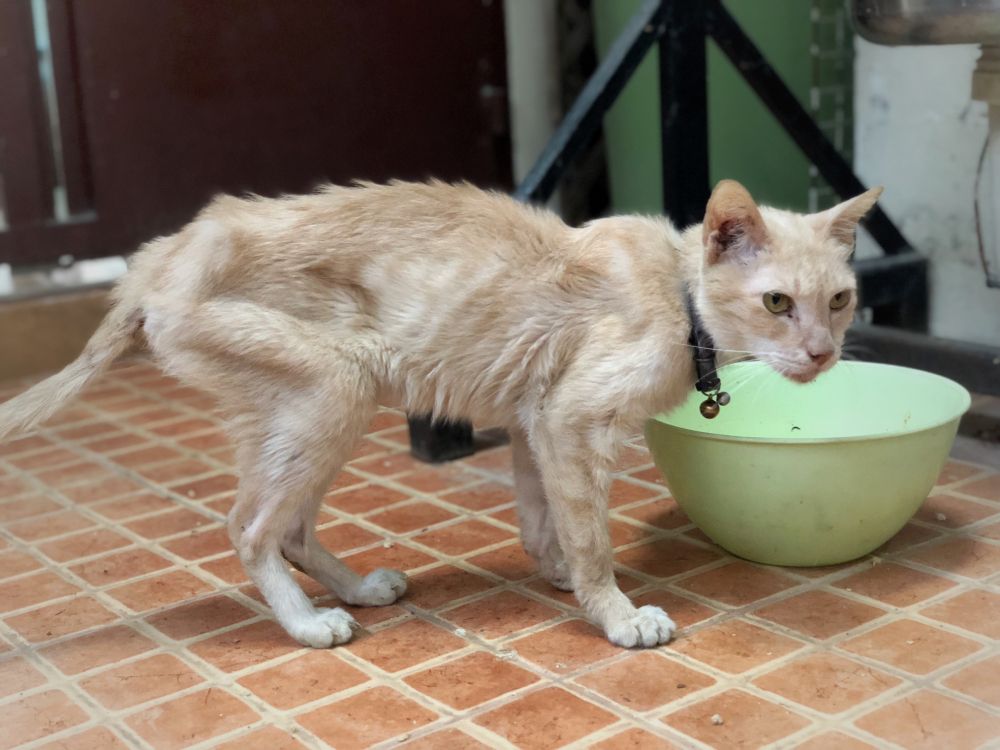
Cats are not always the most forthcoming when it comes to illness, and it’s up to us to be on the lookout for any signs that things aren’t right. One of the most significant and worrying signs of feline disease is weight loss, particularly when it happens over quite a short period of time. If your cat seems to have shed some weight, and you haven’t had them on a weight loss plan, it is vital to schedule a check-up with the vet. Rapid weight loss can be extremely dangerous for your cat and is usually a sign that something significant is going on.
Below, we look at 12 possible causes of sudden weight loss in cats.

The 12 Causes of Sudden Weight Loss in Cats
1. Hyperthyroidism
One of the most common diseases in older cats, hyperthyroidism is caused by a benign tumor growing on the thyroid gland that causes the overproduction of the thyroid hormones T3 and T4. The excess thyroid hormones put the metabolism into overdrive, resulting in weight loss, increased heart rate, increased thirst and urination, hyperactivity, vomiting, and diarrhea.
Left untreated, hyperthyroidism will lead to hypertension (high blood pressure), kidney and liver problems, heart disease, and blood clots. Fortunately, there are several different treatments for the condition, including daily medication, surgical removal of the thyroid glands, and using radioactive iodine to destroy all thyroid tissue.
If you are concerned about the health and well-being of your pet, seek veterinary advice for the best course of action.
2. Diabetes Mellitus
Although cats can suffer from Type 1 diabetes (insufficient insulin production), the more common form seen in felines is Type 2 diabetes (aka insulin resistance). It is most often seen in overweight and obese middle-aged to older cats, and the Burmese breed appears to be overrepresented. Along with rapid weight loss, the most significant clinical signs of diabetes are increased appetite, thirst, and urination.
Unlike type 1 diabetes, type 2 diabetes can often be controlled through dietary modification, but some cats will still require insulin dosing to get complete control of the disease.

3. Renal (Kidney) Disease
Cats are particularly prone to developing renal disease, and it is one of the most common causes of illness and death in older felines. Renal disease can develop over a prolonged period (chronic) or as the result of a more sudden illness or event (acute), like toxin ingestion. Often, the early signs of chronic renal disease are not very noticeable, and it’s not until we see a drop in weight that we realize there is a problem. Cats suffering from acute renal disease, however, will usually show signs such as vomiting and lethargy rather than weight loss.
Other signs of renal disease include increased thirst and urination, decreased appetite, dehydration (small, dry feces, prolonged skin tenting), vomiting, inappetence, and lethargy.
Depending on the underlying cause, cases of acute kidney disease may be successfully treated with aggressive fluid therapy and medical treatment. Chronic renal disease is usually a progressive condition, but diet management, supplements, and medications can significantly slow its progression.
- Catster Recommends: Best Cat Foods for Kidney Disease – Reviews & Top Picks
4. Dental Disease
Cats can often mask the signs of tooth disease quite well, but if they have severe dental disease, infection, gingivitis (inflammation of the gums), or a painful tooth, their food intake may drop suddenly, resulting in sudden weight loss.
If your cat’s weight loss is due to a dental problem, you would expect to also notice some excessive and/or smelly salivation, pawing at the mouth, rubbing the face and mouth on furniture or carpet, or difficulty chewing food.
Cats are also particularly susceptible to squamous cell carcinoma (SCC), an aggressive form of cancer in the mouth, so any of the signs above should be treated seriously.

5. Neoplasia (Cancer)
In addition to SCC, several forms of cancer can cause weight loss in cats, the most common being intestinal lymphoma. There are different forms of lymphoma in cats, some are very aggressive, while others can be managed for several years on medication. In addition to weight loss, intestinal lymphoma will usually present with gastrointestinal signs, including vomiting and diarrhea, and without advanced testing, is often indistinguishable from inflammatory bowel disease.
6. Inflammatory Bowel Disease
IBD is relatively common in cats, possibly due to the domestic feline food often being quite far removed from their ancestral diet, meaning that the form of protein they eat is not always well tolerated by their gastrointestinal tract. Cats suffering from IBD often suffer from waxing and waning episodes of vomiting and diarrhea, with severely affected cats unable to form solid stools. Most cases of feline IBD can be well controlled by identifying and excluding the trigger of the inflammatory reaction, usually a protein source. In severe cases, immunosuppressive medications such as corticosteroids (eg. prednisone) may be used to control the clinical signs.

7. Cardiac (Heart) Disease
Cardiac disease in cats is often referred to as a silent killer, as there are often no obvious clinical signs of a problem until heart failure occurs. However, some cases of heart disease can result in a reduced appetite and weight loss, highlighting the importance of early veterinary attention.
8. Hepatic (Liver) Disease
Inflammation, neoplasia, and infection of the liver can result in sudden and dramatic weight loss, usually accompanied by a loss of appetite, vomiting, diarrhea, and jaundice. Interestingly, sudden weight loss in overweight and obese felines can sometimes cause a condition called ‘hepatic lipidosis’, whereby the rapid breakdown of body fat can have a toxic effect on the liver, causing even more weight loss. This is one reason why any weight loss plan for an overweight cat should aim for gradual weight loss rather than any dramatic results.

9. Feline Infectious Peritonitis (FIP)
Caused by a strain of coronavirus, feline infectious peritonitis was, until recently, an invariably fatal disease. It is most commonly seen in younger cats, but can potentially be found in cats of all ages. The virus that causes FIP, feline enteric coronavirus (FeCV), is relatively common and often asymptomatic, but around 10% of infections mutate into the pathogenic form.
Remdesivir is an injectable treatment that has been successfully used to treat FIP in Australia and the UK since 2021, but this medication was not approved for use in the US. Fortunately, an oral version of the medication, GS441524, was approved by the FDA in 2024.
10. Feline Leukemia
Caused by the Feline Leukemia Virus (FeLV), feline leukemia is actually the most common form of feline cancer. It is spread between cats through saliva, urine, feces, and milk. Cats infected with FeLV can sometimes mount a successful immune response and avoid long-term effects, but for those who progress to the more advanced version of the disease, feline leukemia is invariably fatal.
Weight loss from feline leukemia usually occurs over a longer period, but it can happen quite rapidly in some cases. Fortunately, the FeLV vaccination is an effective way to prevent infection.

11. Internal Parasites
Intestinal worms are readily spread between cats (and even humans) through their feces. Cats of any age can be affected, but more significant weight loss is usually seen in young cats and kittens. Other signs of intestinal worms can include increased appetite, abdominal swelling, anal irritation, and worms or worm segments in the feces. Regular worming treatments are necessary to keep intestinal worms at bay, as they are only effective against certain stages of the worm life cycle.
- Our Top Picks: Best Cat Dewormers – Reviews & Top Picks
12. Anxiety/Stress
Although anxiety and stress are more likely to result in more gradual or subtle weight loss, in extreme cases, it could be enough to cause sudden weight loss in your cat, particularly if they stop eating, sleep less, and become hypervigilant.
Other signs of anxiety and stress in cats include overgrooming, hiding, and inappropriate urination. Determining the trigger for your cat’s stress/anxiety is essential. Often, the trigger can be addressed or managed directly, but in some cases, the use of calming pheromones, medications, or supplements may be needed, particularly if the source of the anxiety remains unidentified or is beyond our control.


Frequently Asked Questions
Don’t cats lose weight when they get old?
It’s really common to hear people say that their cat’s weight loss is just ‘down to old age’, and it’s true that, just like us, our cats will often lose a bit of muscle mass as they get older and become more active. However, if they are progressively losing weight and body condition, there is usually a reason, whether it be slowly progressing kidney problems, arthritis, dental disease, or even an overactive thyroid. Before you write your cat’s weight loss off as ‘just old age’, it’s a good idea to have them checked out for any health problems. Annual blood tests are a great way to keep an eye on your aging cat’s health and get ahead of any issues so that they can get the most out of their retirement years.
Why does my cat look thinner on the back but their tummy looks fat?
This type of change in a cat’s weight can occur for a number of reasons. As mentioned above, as cats get older, they can lose muscle mass, and this can sometimes result in a shift of weight distribution as the muscles over their back and abdominal wall become weaker.
However, this can also be a sign of serious illness, particularly if it occurs quickly or in a younger cat. Ascites, which is the accumulation of fluid inside the abdominal cavity, can cause a cat to look like they’ve gained a lot of belly weight in a short time, but is actually a sign of some pretty serious diseases, including cardiac disease, liver disease, neoplasia, FIP, and intestinal worms.
Cats that have gained a lot of weight due to over-eating or inactivity will also carry a lot of additional weight in the abdomen, which, like in humans, can put them at a higher risk of health problems like arthritis and diabetes.

Summing Up
Any sudden weight loss in cats is a sign of a serious problem and one that should never be ignored. Even if you think you might have identified the reason for your cat’s weight loss, a thorough examination is essential to check for any underlying health conditions, particularly as many of the problems above can be successfully managed or treated if diagnosed early.
Sources
Featured Image Credit: Aun25, Shutterstock
Expert cat care, straight to your inbox
News, insights, and useful advice, delivered to you.

No spam — unsubscribe anytime.
By signing up, you agree to our Terms & Conditions and Privacy & Cookies Policy.
How useful was this post?
Click a star to rate. You can leave written feedback afterwards. (We read all feedback.)
Dr. Karyn Kanowski BVSc MRCVS (Veterinarian)
Dr. Karyn comes from Queensland, Australia, and has lived in the UK for the past 10 years. In 2010, she graduated from The University of Queensland School of Veterinary Science and also has a Bachelor’s degree in Zoology. She is passionate about using evidence, experience, and owner collaboration to provide the best solutions for pets, and believes in making reliable information about animal health accessible to all. Dr. Karyn shares her home with five cats, four dogs, and one husband. When she is not in the scrubs, she spends her time writing, gardening, and cleaning up pet hair!