“Love to the Point of Invention” – Injured Kitten with a Tiny Toy-Car Wheelchair Finds His Forever Home
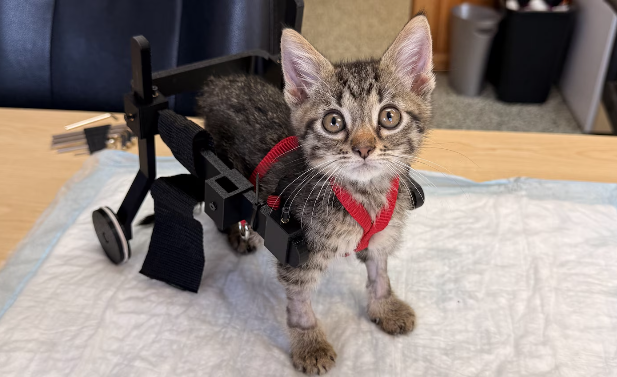
Some kittens steal your heart with their big eyes. Others win you over with their playful antics. And then there's Gelato, a tiny kitten who needed a wheelchair and ended up getting one made from Hot Wheels cars. Yes, really. Human ingenuity and humane creativity to the rescue!
Becoming more mobile in a Hot Wheels wheelchair might seem like a dream come true, but today, Gelato has even more reasons to celebrate: He’s found his forever home.

Too Small for a Wheelchair, Big Enough to Steal Hearts
Gelato arrived at Cincinnati Animal CARE in Ohio as a stray kitten with a lower-back injury that left him unable to use his hind legs normally. The shelter team wanted to help him move around, but there was a rather inconvenient problem. The wheelchairs they had available were too big for his tiny body.
Now, anyone who has lived with a kitten knows that, besides being irresistibly cute, they can be remarkably determined little creatures. They want to explore everything, investigate every corner, and get involved in whatever their humans are doing. Being unable to move around easily can limit those everyday experiences for the tiny fur balls.
Fortunately, Gelato had people in his corner who weren't about to let his small size stop him from exploring the big world.
The shelter's lead veterinary technician, Mallory Smith, came up with a wonderfully resourceful solution. She built a miniature wheelchair using cardboard, tape, zip ties, wooden rulers, and Hot Wheels toy cars. The first version needed adjustments, but Mallory kept working until the little device was ready to support Gelato as he moved around. While this is certainly quite a unique solution, what isn’t unusual is the compassion and creativity behind it. Gelato’s improvised mobility device is a perfect example of how animal medical care personnel go above and beyond to help patients in need.

From Toy Cars to a Custom Wheelchair
Gelato's homemade wheelchair was a clever solution to an immediate problem. However, a makeshift device is not necessarily the best long-term option for a growing kitten with mobility challenges.
Help arrived in the form of an engineer who created a custom 3D-printed wheelchair designed to fit his body and accommodate his growth. The toy cars were gone, but Gelato’s future mobility was looking more stable.
Gelato got lucky the moment someone refused to give up and asked, "How can we make this work?" This first lucky chance opened him to new opportunities from a wider effort to help one small animal have a better chance at life. It’s impressive how sometimes sharing an animal's story can make all the difference. A social media post can connect shelters with people who have the skills, resources, or homes that animals need.
Giving Gelato a way to move around was an important first step. And there was another milestone waiting for him: a loving family of his own.
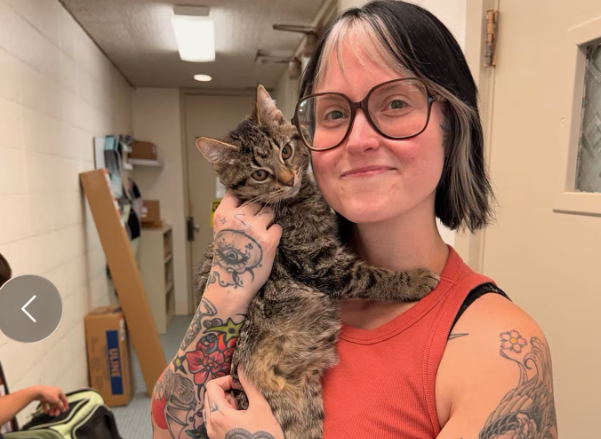
Gelato Finds His Purrfect Family!
As the story of Gelato’s unusual mode of transport spread, drawing plenty of social media attention, it also caught the eye of Hope Hollandsworth, a 28-year-old tattoo artist and devoted cat parent. When she first saw a photograph of Gelato during the summer, she felt immediately drawn to him.
Hollandsworth already cared for two cats with spinal injuries, Bread Crumb and Sprinkles. Both have limited use of their hind legs and rely on their front legs for mobility. She understood that caring for cats with special needs could involve extra responsibilities, adjustments, and plenty of patience.
In other words, she wasn't going into this adoption without knowing that life with a disabled cat can look a little different. Cat lovers are abundant, but those experienced in caring for disabled felines? Not quite as plentiful.
Hope wasted no time, adopting Gelato as soon as she met him at the shelter. The five-month-old kitten spent his first night in his new home sleeping in her arms.
Can Cats With Disabilities Have Happy Lives?
Absolutely. A disability does not automatically mean that a cat has a poor quality of life. Cats with mobility challenges can still enjoy affection, play, exploration, food puzzles, comfortable naps, and the company of people they trust.
What really matters is understanding the individual cat's needs and making reasonable adjustments to help them live comfortably.
For a cat with a spinal injury, this may include providing easy access to food, water, resting areas, and litter boxes. Non-slip flooring, ramps, and thoughtfully arranged furniture can also help some cats move around more safely. Depending on the injury, a cat may need help with bladder or bowel function, regular skin checks, or a rehabilitation plan.
These are not small details. Some cats with spinal injuries cannot empty their bladders normally, which can lead to serious complications without very devoted care. A veterinarian can assess bladder function, mobility, sensation, and other concerns, then explain what support the cat will need at home. The real challenge is finding someone with the time and patience to take over these responsibilities on a daily basis.
Hollandsworth's experience with Bread Crumb and Sprinkles gave her a head start.

Purrfectly Loved
Gelato will continue receiving therapy in the hope that he may regain some use of his hind legs, but for now, his recovery is uncertain. Spinal injuries vary, and a cat's prognosis depends on several factors, including the extent of the damage and the neurological function that remains.
But Gelato doesn't need a guaranteed recovery to deserve a happy future. He's got somewhere to go, someone to cuddle, and absolutely no need to prove that he can walk to earn his place in the family.
His new family is ready to love and support him, whether or not he ever walks on his own. Hollandsworth put it beautifully: to her, Gelato is already perfect just the way he is.
There is a lot of wisdom in that simple sentiment. We can hope for progress, celebrate small improvements, and pursue appropriate treatment without making an animal's worth depend on how much they recover. Loving others, whether animals, people, or even ourselves, for who they are, exactly as they are, is what we call true love.
Expert cat care, straight to your inbox
Vet-reviewed advice, behavior tips, and the best of Catster. Free, and you can unsubscribe anytime.
By signing up, you agree to our Terms & Conditions and Privacy & Cookies Policy.
Dr. Paola Cuevas MVZ (Veterinarian)
Dr. Paola Cuevas is the Senior In-House Veterinarian at Pangolia, the parent company of Catster. She has over 18 years of experience as a veterinarian and animal behaviorist. Paola's focus is on preventive medicine and animal welfare. Paola has a large range of skills in from diagnostic imaging to nutrition and clinical pathology. Paola enjoys sharing her extensive knowledge of animal training with our Catster readers and is always happy to answer reader questions as our in-house veterinarian.
Join the conversation
Ask a question, share your story, or send private feedback.