How to Give a Cat a Bath (Without Getting Scratched): Expert Tips & Tricks

In this article
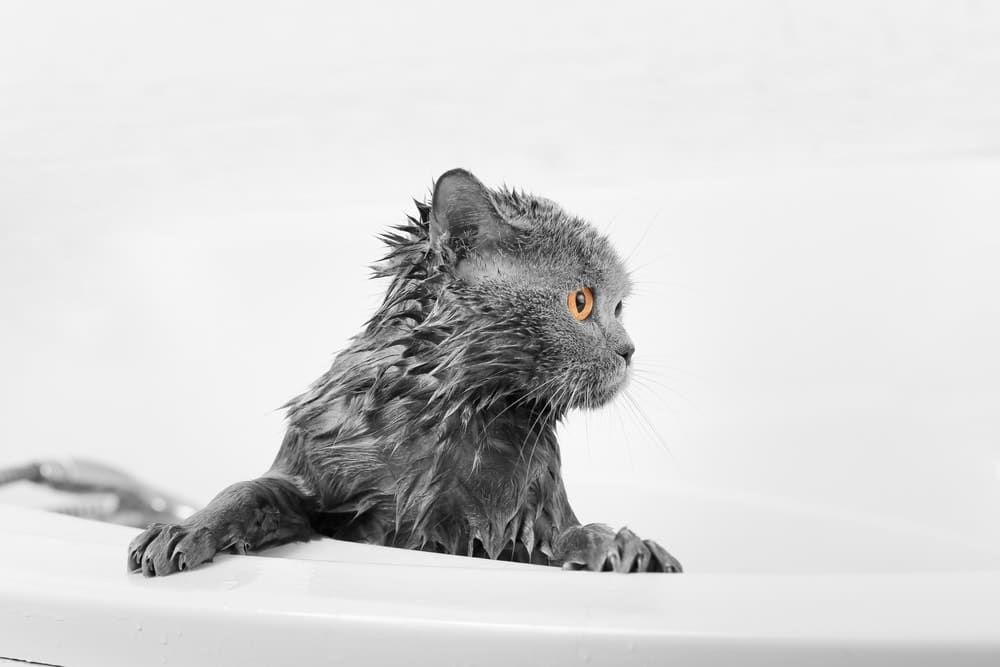
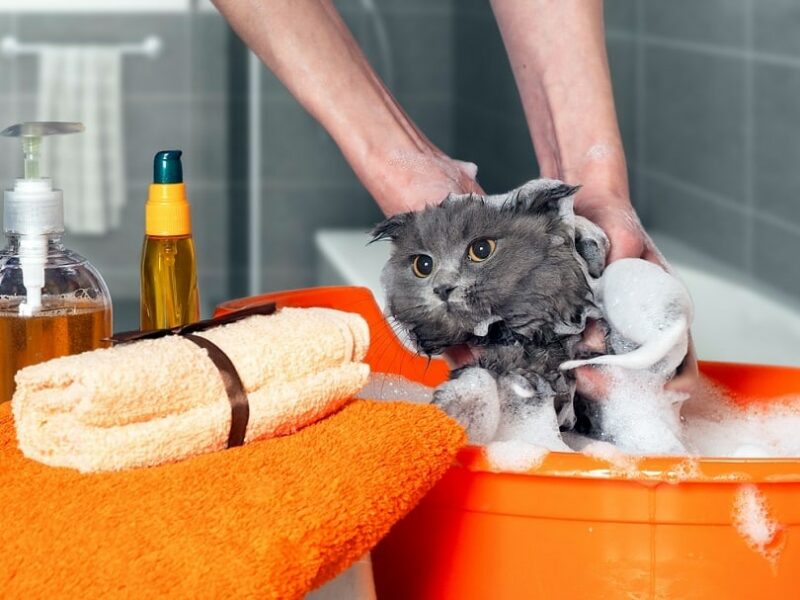
If you have owned a lot of cats, you know how much they hate water. If you are a new pet owner, you are likely in for a big surprise when you attempt to give your cat their first bath. No matter how cute and cuddly they are, you are likely to receive the full force of their claws when you put them in water, and they can quickly shred your skin to pieces, leaving you bleeding and in pain before you even reach for the cat shampoo.
If you need to bathe your cat, keep reading, as we provide you with a step-by-step guide that will not lead to injury for either of you.

How to Give a Cat a Bath in 9 Easy Steps
If you have determined you need to bathe your cat, then these are the steps we recommend you take to do it.
1. Secure Your Cat
Before you tip off your cat that you intend to bathe them, we recommend securing the cat with a harness. A harness is a great way to control your cat's movements without having to physically restrain them yourself, as it prevents the cat from running away. Avoid the harnesses with chest padding for baths, especially if you are bathing to remove fleas, as it will be hard to clean the area behind the pad.
2. Choose a Spot and Method
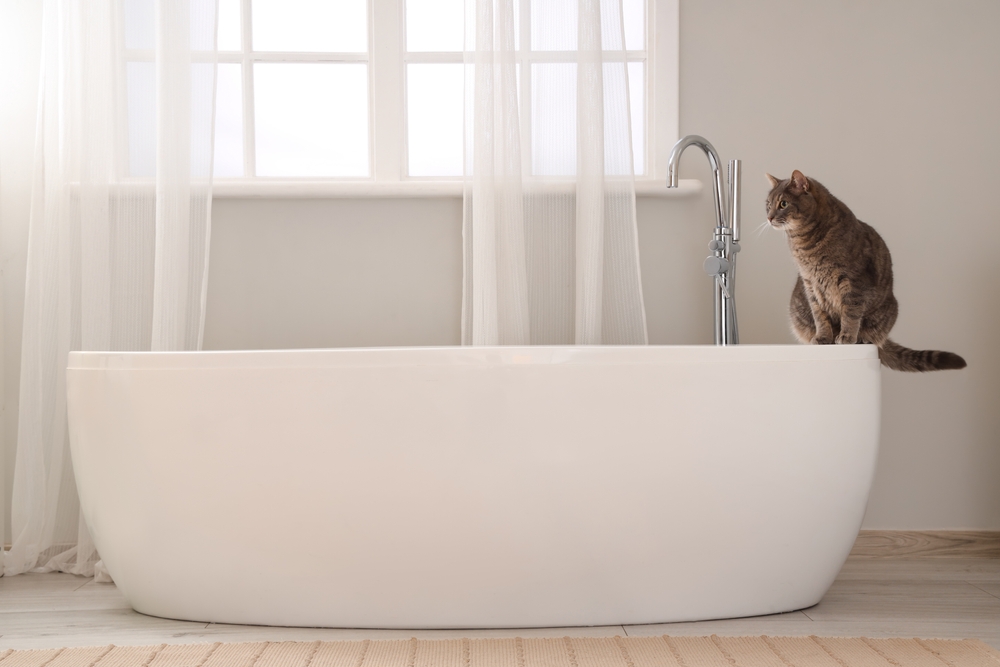
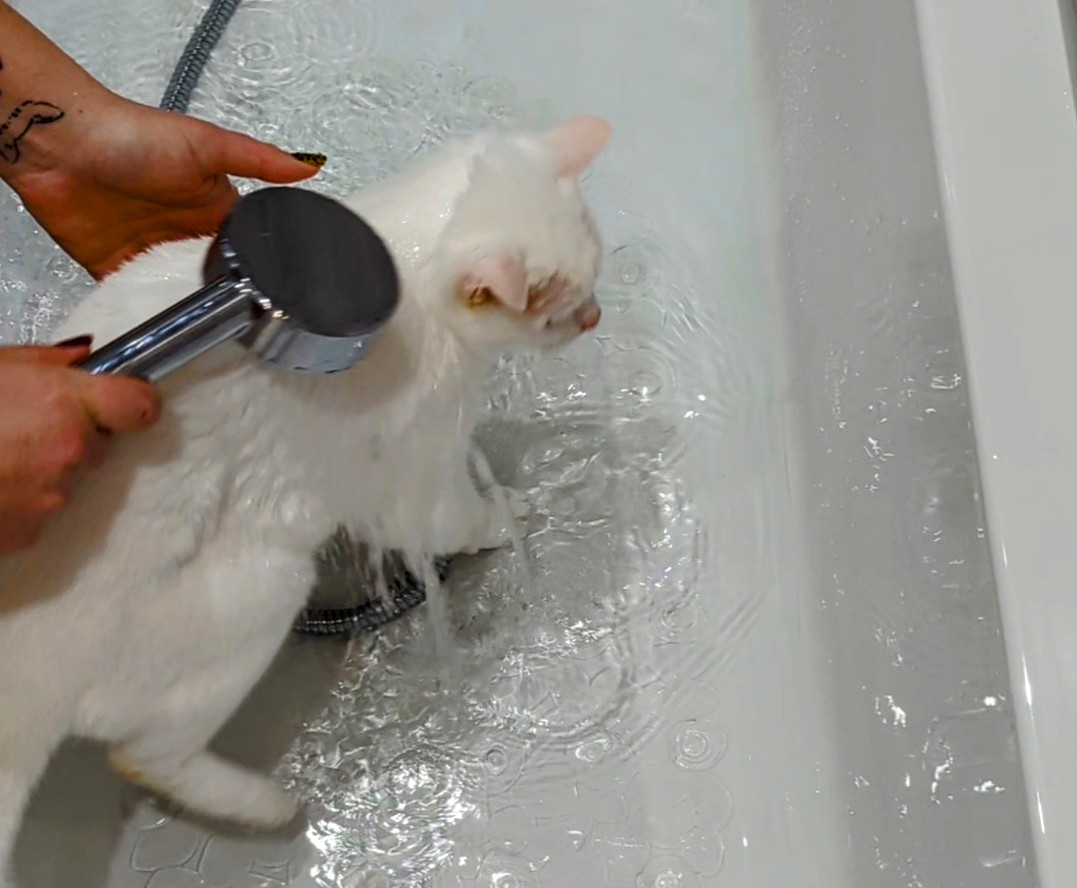
Cats tend to do the best when you’re using a spraying showerhead attachment. It doesn't require filling a basin with water and tends to scare the cat less. If the showerhead attachment is not an option, you will need to choose the tub, sink, or basin to give them a bath. The tub is probably best for full-grown cats, but you may find one of your sinks or a shallow plastic basin easier when bathing a kitten. A great way to help your cat feel more secure is to add a towel to the bottom of the tub, as the slippery surface can make them even more uncomfortable.

3. Gather Your Supplies
You will need plenty of towels besides the one in the tub. You will need a towel to dry them off and another to wrap them up when they are finished. Have your shampoo ready, and you may also choose to use rubber gloves to protect yourself from scratches. In our experience, the gloves tend to scare the cat more, but they are helpful to minimize injury, especially if you haven't given many baths before. If you are using gloves, get the ones that go up to the elbow for maximum protection. Try to desensitize the cat to the gloves using positive reinforcement methods before attempting to wear them to protect yourself from scratches during a bath.
4. Fill the Basin
If you use a tub, sink, or basin, fill it with warm water to get it ready. You want it to be warm to the touch, like you would create for a baby.
5. Place the Cat in the Basin
Gently put your cat in the water, and moving quickly but calmly and gently, get the fur wet with the clean water, or use the shower attachment to rinse them. Keep them in place with the harness instead of your hands to minimize injury to yourself. A second person will be helpful here.
6. Apply Shampoo
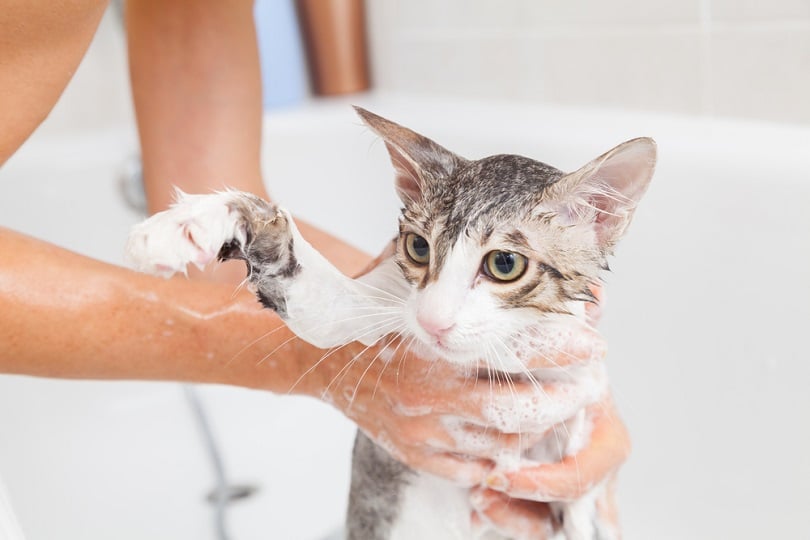
Continuing to move quickly, apply the shampoo to your cat's body and head, but be careful not to get any in their eyes.
The best pet shampoos are carefully formulated to clean your pet without causing irritation. Hepper's Colloidal Oatmeal Pet Shampoo does a great job of this by combining soothing ingredients like aloe vera and colloidal oatmeal. It is also pH-balanced and free of irritants like dyes, soaps, sulfates, and phthalates. You and your pet will both enjoy the fresh, clean scent, too!

- Only Natural Pet Shampoo - Our vegan, plant-based formulation is made with safe and natural pH-balanced ingredients to moisturize and soothe skin, leaving a fresh, soft and glossy coat to turn heads
- No Soap - A cat and dog wash free from soaps, glutens, dyes, DEA, sulfates and phthalates means it's a hypoallergenic dog shampoo for itchy skin / cat shampoo for itchy skin made with only good stuff
- Colloidal Oatmeal - Formula soothes and nourishes dry, irritated skin, providing itchy skin relief for dogs and cats alike. Trust us - they'll thank you with lots of licks!
At Catster, we’ve admired Hepper for many years and decided to take a controlling ownership interest so that we could benefit from the outstanding designs of this cool cat company!
7. Rinse
Once the shampoo is applied and has created a lather, gently rinse it from your cat's body with the sprayer or a small cup. Make sure you've removed all of the soap before lifting the cat out of the water.
8. Towel Dry
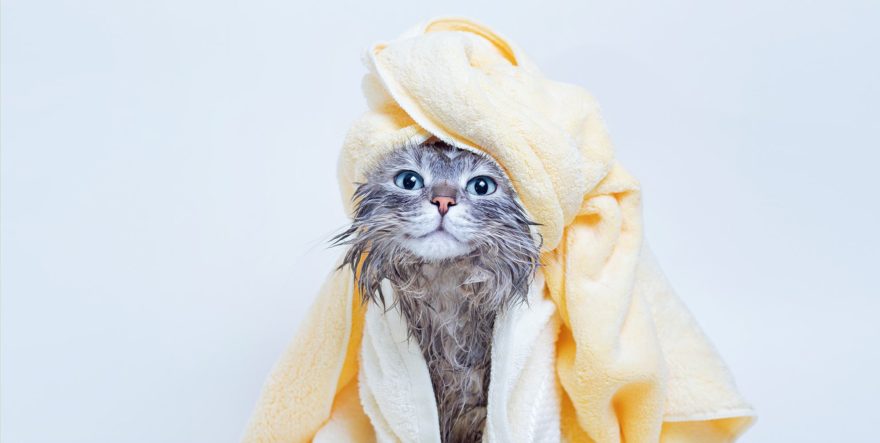
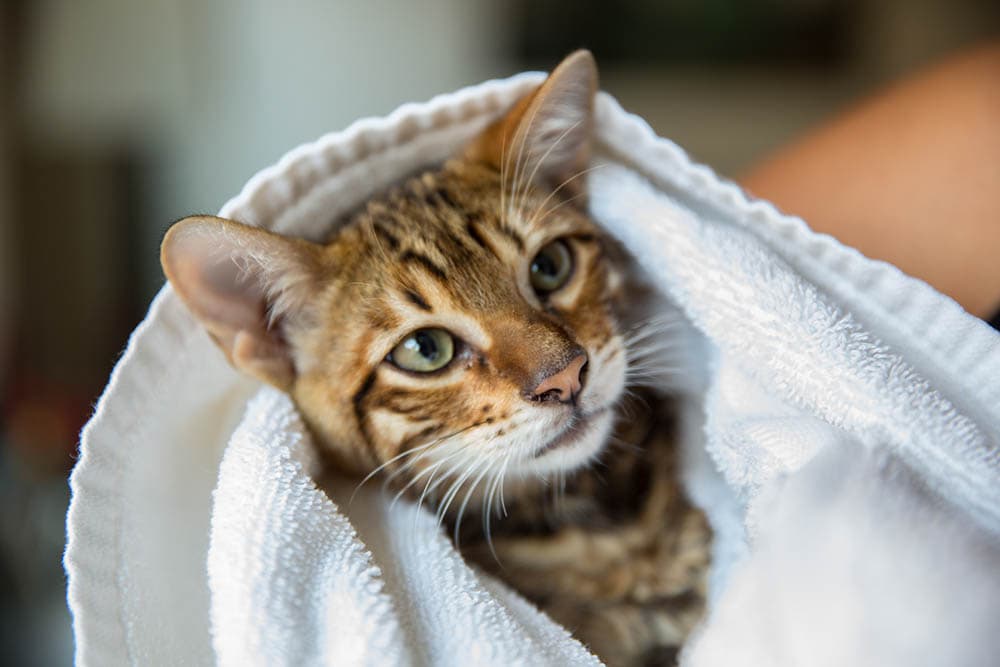
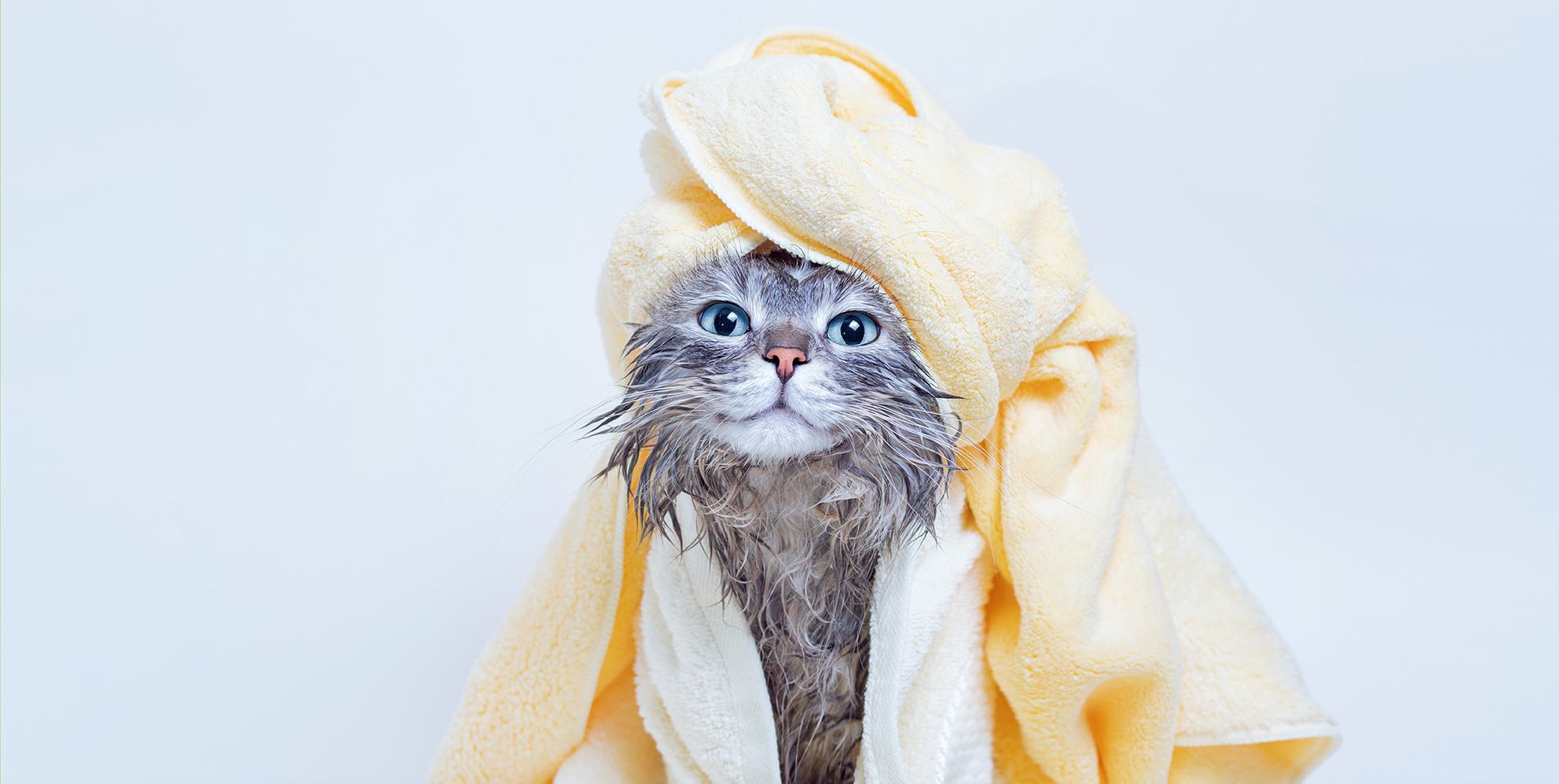
Use a clean towel to dry off your cat the best you can. Once again, the harness is the best way to keep the cat in place while you work. Once you get most of the water off, you can wrap them in another dry towel and hold them, if they will allow it. This will help keep them warm and absorb the rest of the moisture from their body.

9. Air Dry
If the temperature is not too cold and your cat is calm and dry, offer them a treat, put them down, and remove the harness. It is likely that they will run off to groom themselves and will return in an hour, looking for another treat. They probably deserve it and so do you!

How Often Should I Bathe My Cat?
If you asked your cat how often you should bathe them, they would likely say never, and it may surprise you to find out that we technically agree. Despite the huge mess they like to create around the litter box, cats are extremely clean animals that meticulously bathe themselves for a good portion of the short time they are awake each day. In fact, when a cat doesn’t groom themselves, it is often a sign of a health problem, and you should take them to the vet and have them checked out. We recommend bathing a healthy cat rarely, if ever.
Why Would I Have to Bathe My Cat?
- Fleas: You might be surprised to find out that even indoor cats can get fleas. It's rare, but fleas can jump on your clothing while you are out for a walk and wind up on your cat when you come back home. Outdoor cats will get fleas frequently, and it will be a constant concern throughout your cat’s life. If your cat goes outside, we recommend that you speak to your vet about a preventive flea treatment instead. If you have fleas on an indoor cat, you can probably take care of them with a flea shampoo, which will require bathing your cat. Keep in mind that you will also need to perform several thorough cleanings in your home to get rid of those pesky critters.
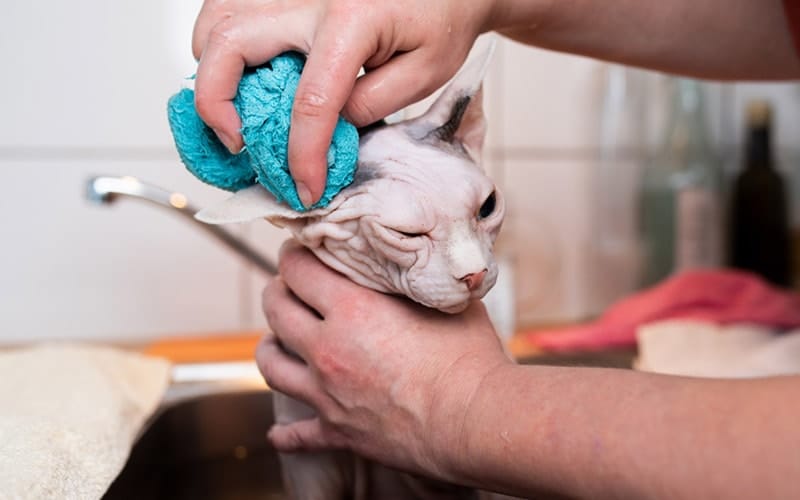
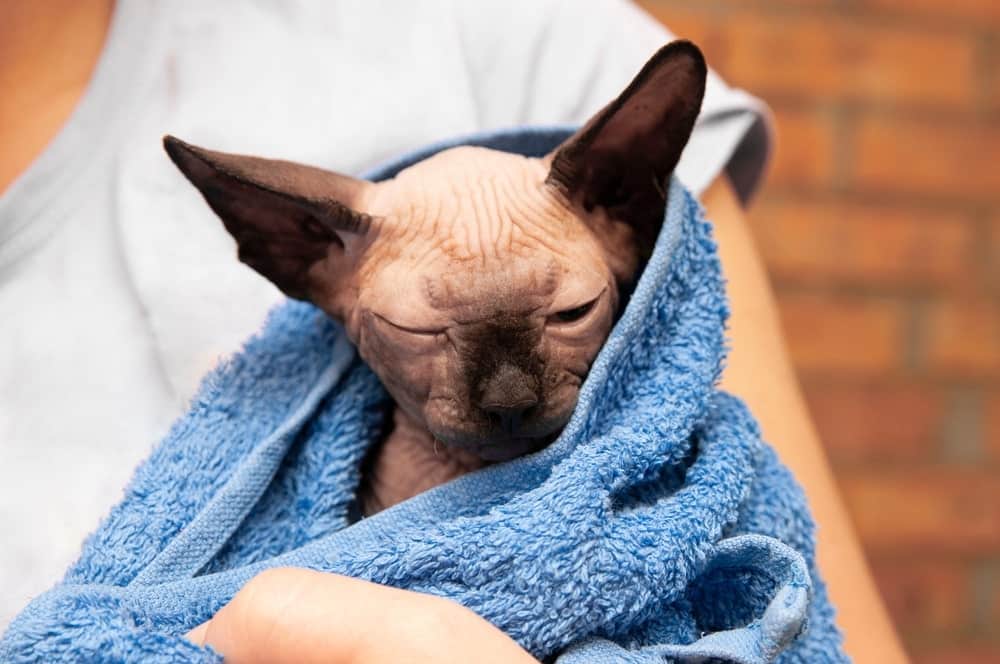
- Hairless Cats: The Sphinx, Peterbald, Donskoy, Bambino, and other hairless cat breeds accumulate oil on their skin that you will need to wash off regularly. These oils would normally coat the hair as it grew, and the cat would groom it away, but in the case of these cats, it builds up on the skin. These oils will then rub off on your furniture and clothing as the cat moves, and they will also begin to smell. To keep hairless cats (and your home) clean, you will need to bathe them every week with a sensitive, natural shampoo. There are plenty of brands available, and you may need to try a few to find one you both like.
- Skunk: If your cat confronts a skunk, they will need at least one You've no doubt heard dozens of methods to get the smell off your pet, from baking powder to tomato juice, but they will all require putting your cat in the tub. We recommend a good shampoo with a sprinkling of baking powder because tomato juice can get quite messy, especially with a cat.
- Other Reasons: Your cat might also walk through mud, chemicals, paint, or some other substance that they can't clean off themselves or you don't want them to. In this case, you will need to bathe them to get them clean.
Extra Tips
- If you intend to bathe the cat regularly, start when they are just a kitten, and they will consider it a regular part of their routine.
- Bathe kittens after a long play session.
- Bathe older cats after an afternoon catnap.
- Never use human shampoo.
- Calming pheromones can help some cats.
- Use a helper to hold the harness and give you any needed materials.

Summary
Bathing your cat will be a memorable experience for both you and your cat, but with a cat harness and shower attachment, it can go a lot better than with a tub full of water and rubber gloves. Some cats don't mind taking a bath, and if you do it every few months from birth, they may become used to it. However, most cats never need a bath, so there is no sense in putting you both through it unless it's absolutely necessary. In that case, move quickly and use this guide.
We hope you have enjoyed reading and feel more comfortable about this seemingly impossible task.
See also:
Featured Image Credit; Zulkarnieiev Denis, Shutterstock

Expert cat care, straight to your inbox
Vet-reviewed advice, behavior tips, and the best of Catster. Free, and you can unsubscribe anytime.
By signing up, you agree to our Terms & Conditions and Privacy & Cookies Policy.
Christian started writing for a local newspaper as a teenager, and he's been involved in the publishing industry for most of his adult life. Combining his love of writing with a passion for animals, he is currently the Director of Editorial at Pangolia and the Editor-in-Chief at Catster.
Christian lives in the Philippines with his wife, son, and four rescue cats: Trixie, Chloe, Sparky, and Chopper.
Join the conversation
Ask a question, share your story, or send private feedback.