How to Care for Hairless Cats: Vet-Approved Tips & Guide


In this article
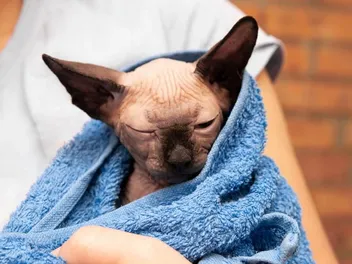
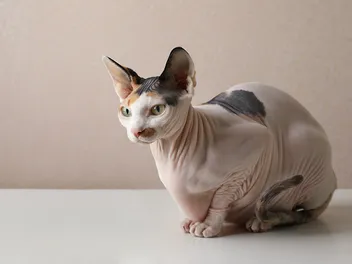
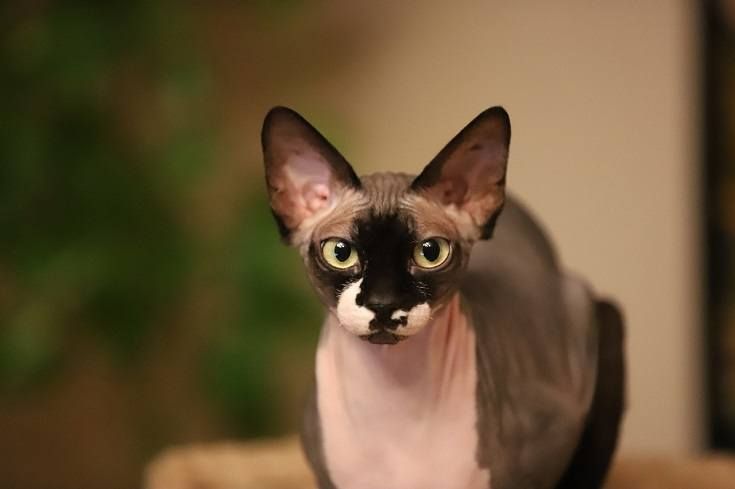
Hairless cats are a real eye catcher for most people. Even people who aren’t too cat crazy might be mesmerized by the odd look and interesting breed characteristics. If you live in a home with an allergy sufferer, hairless cats have certainly come up on your list of possible hypoallergenic cats.
But are these cats truly hypoallergenic? Are they difficult to take care of? And do they have more health concerns than other feline companions? In this article, we aim to explore everything about caring for a hairless cat, so you know exactly what you’re getting yourself into before you commit.

Hairless Cats Require Special Care
One of the first misconceptions about hairless cats is that they are easier to manage. While certain aspects may be pretty simple, they actually require a little bit more specialized care than normal cats.
Granted, it’s probably a really big upside to you if you’re the kind of person who really doesn’t like shed fur in your home. However, what they lack in fur, they make up for in other ways.
Primarily, hairless cats require extremely diligent hygiene upkeep. Cats are always notorious for being avid groomers, but your hairless cutie might need a little extra help. Because there is no hair to distribute the oils produced by the skin, oils and debris build up on the skin and around their nail beds.
Their skin will get tacky and oily, requiring frequent wipe downs. You will not need to give your cat a bath every few days, but you may need to have some hypoallergenic wipes on hand to keep them clean.

Maintenance & Grooming Tips for Hairless Cats
If you own a hairless cat, or you’re thinking about getting one, learning to groom will help tremendously.
1. Know All the Areas of Interest
A hairless cat will differ very much from their fully furred counterparts. Here are some areas of care you might not expect, but should be aware of.
2. Offer Full Body Baths
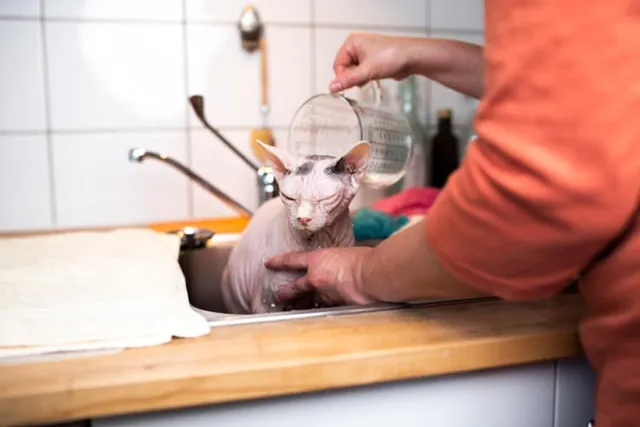
Most cats can get by without frequent baths, but a hairless cat is not among them. The oily build up on their skin accumulates and requires bathing on average every 2-4 weeks, although this will vary between individuals.
Getting your cat used to that as a kitten will make this very second nature when they’re older, so they won’t be fighting you. You can gently rub your hairless cat’s skin to remove all of this buildup they might have acquired since their last bath.
The best pet shampoos are carefully formulated to clean your pet without causing irritation. Hepper's Colloidal Oatmeal Pet Shampoo does a great job of this by combining soothing ingredients like aloe vera and colloidal oatmeal. It is also pH-balanced and free of irritants like dyes, soaps, sulfates, and phthalates. You and your pet will both enjoy the fresh, clean scent, too!

- Only Natural Pet Shampoo - Our vegan, plant-based formulation is made with safe and natural pH-balanced ingredients to moisturize and soothe skin, leaving a fresh, soft and glossy coat to turn heads
- No Soap - A cat and dog wash free from soaps, glutens, dyes, DEA, sulfates and phthalates means it's a hypoallergenic dog shampoo for itchy skin / cat shampoo for itchy skin made with only good stuff
- Colloidal Oatmeal - Formula soothes and nourishes dry, irritated skin, providing itchy skin relief for dogs and cats alike. Trust us - they'll thank you with lots of licks!
At Catster, we’ve admired Hepper for many years and decided to take a controlling ownership interest so that we could benefit from the outstanding designs of this cool cat company!
3. Purchase Proper Grooming Products
Hairless cats need shampoo and other grooming products with no artificial scents or extras. Stick to plain, hypoallergenic products that won't irritate or impact your cat’s skin.
4. Buy Cat-Specific Wipes
As you can imagine, a hairless cat can be very sensitive. If you use any type of wipes, ensure they are completely species specific. Regular baby wipes, for example, do not contain the pH balance necessary to work on the cat’s skin. You can actually cause dryness, irritation, or allergic reactions.
Our Favorite Product
| Image | Product | Details | |
|---|---|---|---|

|
Hepper Wash Wipes |
|
Check Price |
It's hard to beat the convenience of pet-safe wipes after a big adventure, between baths, or when cleaning sensitive areas. Our favorite option is Hepper's Wash Wipes, premium wipes designed to safely and gently remove grime from cats and dogs of all ages and sizes. These hypoallergenic wipes are made in the USA and feature moisturizing ingredients to soothe your pet's skin.
At Catster, we’ve admired Hepper for many years and decided to take a controlling ownership interest so that we could benefit from the outstanding designs of this cool cat company!
5. Provide Extra Warmth
We all know kitties like to perch close to warm things—like vents, sunny windows, laptops, and on top of their favorite human! Your hairless cat will need even more access to toasty spots.
Most hairless cats require help with temperature regulation to prevent them from getting chilled, especially if your home is drafty. You can buy kitty clothes or provide warm cat caves to cozy up in!
You can even get creative and make them a sweater or covering of your own! There are tons of cute ideas on sites like Pinterest, Etsy, and even Facebook DIY groups.
6. Protect Your Cat from the Heat
If your cat will be outside in the sun or loves to rest in direct sunlight through windows, sunscreen is certainly advised. This layer of protection will prevent burns and protect your cat against skin cancer.
7. Feed Your Cat a High-Quality Diet
The best diet for your hairless feline will depend on their age and health. In general breeds without fur to keep them warm can have higher metabolic rates and require more daily calories.
You should ask your vet for the best dietary recommendations. Typically, they will advise a high-quality, protein-rich recipe that you feed to your cat in portions throughout the day.

Hairlessness Is a Genetic Mutation
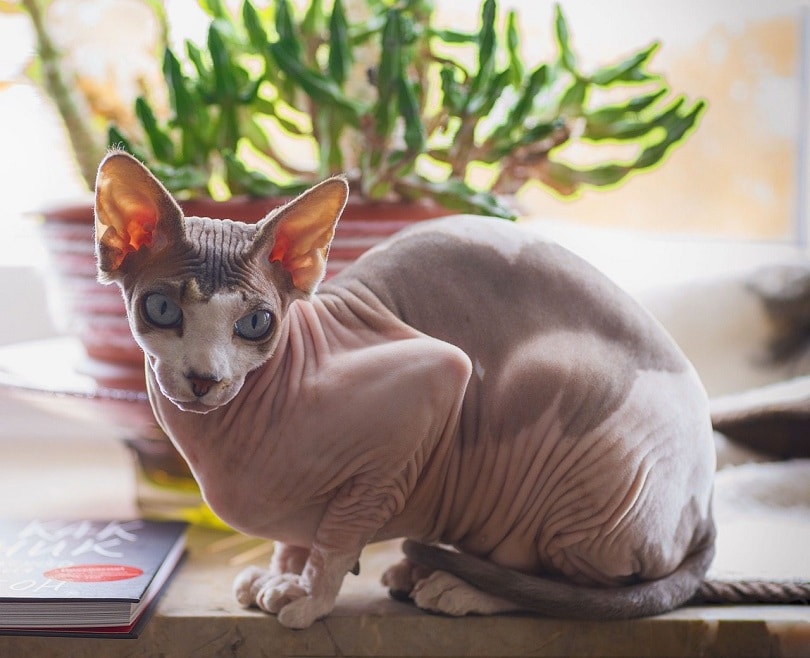
Hairlessness in cats is a result of naturally occurring genetic mutations, and breeds have been developed through selective breeding of these animals. For example the mutations responsible for the nearly hairless coat of Sphynx cats has been demonstrated to be in the gene Keratin 71, which is the same gene that produces the downy, thin, curly coat of the Devon Rex.
Health Issues Associated with Hairless Cats
Pedigree breeds of cat generally use a smaller gene pool for breeding than domestic shorthair cats, and this leads to a higher risk of developing inherited conditions. This is especially the case with hairless breeds of cat. For example, the popular Sphinx cat can be more prone to the heart condition hypertrophic cardiomyopathy as well as the skin condition urticaria pigmentosa. It’s important to make sure your cat comes from a reputable breeder and the breeding parents have had the relevant genetic testing to reduce the risks of kittens developing a genetic disorder.
Other health issues are caused by the loss of protection and warmth due to their lack of haircoat. The risks of these problems can be reduced with special attention.
1. Sunburn/Frostbite
Sunburn, frostbite, and extreme temperatures are a big concern with hairless cats. Your cat does not have a protective layer of fur to keep them safe from many outdoor elements. So, in the summertime, it is imperative to make sure that your kitty has sufficient protection from UV rays.
In the winter, you might need to buy your kitty adorable sweaters or other means of protection to ensure that they're keeping their body temperature up. Your hairless cat can be ultra susceptible to hypothermia and frostbite.

2. Skin Cancer
Unfortunately, since your cat’s skin is exposed all the time, this can leave them susceptible to certain types of skin cancer, including squamous cell carcinomas. Skin cancer usually develops over time, though it can present at any age.
If you notice any changes to your cat’s skin you should get them checked out by your vet as soon as possible. Signs may include:
- Lumps
- Ulcerated, bleeding, weeping lesions
- Scaly patches
- Discoloration
- Scabbing
- Non-healing wounds
- Red, flat plaques
3. Irritation
Hairless cats aren’t necessarily prone to having more sensitive skin than others as far as rashes and irritation are concerned. But it’s definitely possible. Because their skin comes in contact with all sorts of fabrics, materials, and services, it can lead to inflammation or irritation on the skin.

4. Yeast Infections
Because of the build up of oil on the skin of hairless cats, they are more prone to secondary skin and ear infections with yeast or bacteria. This can lead to signs including:
- Itchiness- increased scratching and licking
- Head shaking
- Skin redness and rashes
- Flaking
- Increased odor
Skin infections need examination, diagnosis and treatment from your vet. This may be with medicated shampoos, wipes and ear drops.
If you are concerned or have questions about your cat's health, you can also speak to a vet from the comfort of your own home to help.
Hairless Cats Are “Hypoallergenic”
Getting down to brass tacks, there is no true “hypoallergenic” pet. However, some are less triggering than others for those who suffer with sneezes. In order to understand this, it’s best to get to the basics of what triggers allergies in the first place.
You might think that a pet’s fur is the trigger for allergies—and you’d be partially right! The main allergen is called Fel d 1, a protein found primarily in cat’s saliva. Since you know your cat is so hygienic, you know they love to wash, wash, wash—with their saliva. Fel d 1 then gets stuck on the hair and skin, and with hair shedding it is spread around the home more.
So, while some cats might be less triggering than others because, well, they don’t have fur, no cat is ever truly hypoallergenic.
Not even hairless cats!
Conclusion
Now that you know a little more about caring for your hairless kitty, does it sound so bad? Sure, there are a lot more things to remember when you are trying to keep your little one hygienic, clean, and comfy, but it’s manageable.
Remember, your kitty is very susceptible to cold and hot temperatures. These kitties work best as indoor-only cats unless you're taking them on a controlled walk with a leash and harness. Keep out of direct sunlight and don't take them out in freezing, frosty, or icy conditions.
Sources
Featured Image Credit: lukinIgor, Pixabay
Expert cat care, straight to your inbox
News, insights, and useful advice, delivered to you.

No spam — unsubscribe anytime.
By signing up, you agree to our Terms & Conditions and Privacy & Cookies Policy.
How useful was this post?
Click a star to rate. You can leave written feedback afterwards. (We read all feedback.)
As a freelance dog writer and passionate pet enthusiast, Ashley Bates is pursuing studies in animal therapy. A mother to four human children and 23 animal companions, Ashley is dedicated to volunteering at shelters, advocating for animal rights, and rescuing animals in need. Her goal is to spread awareness, provide education, and offer entertainment about pets to reduce homelessness. Ashley's specialties include dogs and cats.