Cat Body Condition Score: What Is It & How To Work It Out

In this article
The Body Condition Score (BCS) is a quantitative method for evaluating body fat. Think of it as the animal equivalent of the Body Mass Index (BMI) for humans. The BCS is used as a yardstick for measuring the ideal weight of our pets, and it's an important tool as almost 60% of domestic cats are considered overweight 1. Read on to learn more about the BCS and how you can use this tool to determine the condition of your cats.

What Are the Different Types of Body Condition Scores for Cats?
There are two recognized BCS scales: one ranging from one to nine and the other from one to five. Both scales operate on the same principle. The ideal weight is given the numbers in the middle, so 4 and 5 on the nine-point scale or 3 on the five-point scale. Cats scoring below (one or two on the five-point scale or one, two, or three on the nine-point scale) are considered underweight. Cats with values above the ideal weight (four or five on the five-point scale or six, seven, eight, or nine on the nine-point scale) carry excess weight.
Both scales are useful as veterinary staff can add half-points as necessary on the five-point system. For example, an overweight cat who is not quite obese may be assessed at 4.5/5.

Let's look a little closer at what each number on both scales looks like.
- 1/5 or 1/9: Protruding ribs, backbone, and pelvic bones. Clear loss of muscle mass and no palpable body fat.
- 5/5 or 2/9: Visible rib, backbone, and pelvic bones. Minor muscle mass loss and no palpable body fat.
- 2/5 or 3/9: Ribs can be felt easily and may be visible. Waistline is obvious, and there is not much abdominal fat.
- 5/5 or 4/9: Ribs can be felt easily. Slight abdominal tuck and noticeable waistline behind the ribs.
- 3/5 or 5/9: Ribs, pelvis, and spine are palpable. Thin fat layer present. Tummy tuck is obvious but not severe.
- 5/5 or 6/9: Slight layer of fat on the ribs, spine, and pelvis, which makes them slightly more difficult to feel. Minimal tummy tuck and visible waistline.
- 4/5 or 7/9: Ribs, spine, and pelvic bones not easily felt. Moderate fat covering. Waist poorly discernible with obvious abdominal rounding.
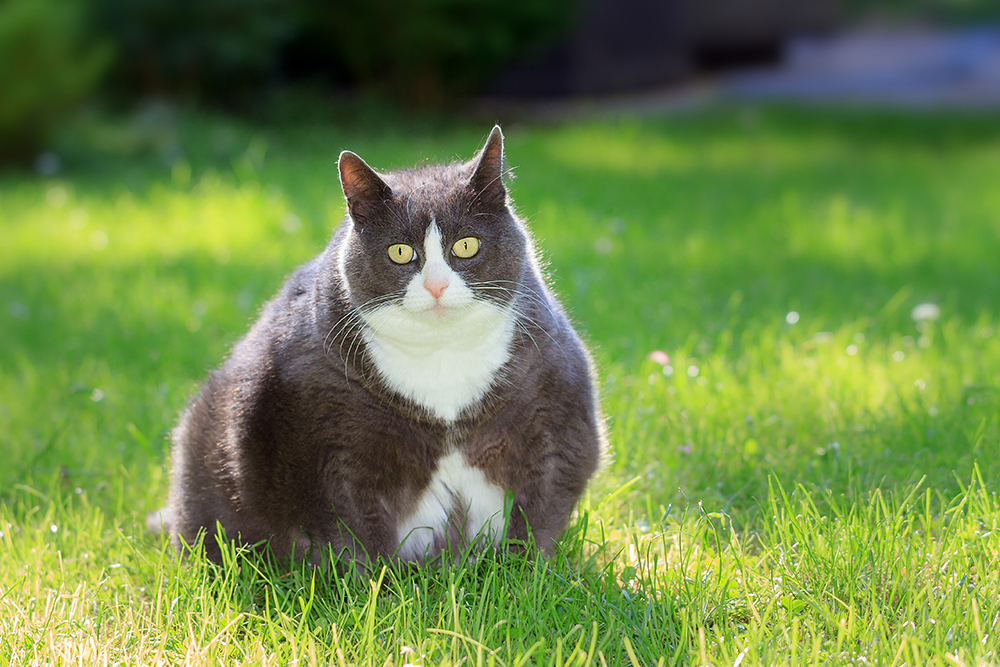
- 5/5 or 8/9: Ribs, spine, and pelvic bones not palpable. Excess fat covering. Obvious rounding of the waist and notable abdominal fat pad. No tummy tuck.
- 5/5 or 9/9: Ribs, spine, and pelvic bones not palpable. Abdominal distension and protruding waistline. Fat deposits present on the face and legs.
How Does It Work?
To assess your cat's BCS, you will need to get hands on your cat for a palpation assessment as well as evaluate their silhouette from above and from the sides.
Palpation Assessment
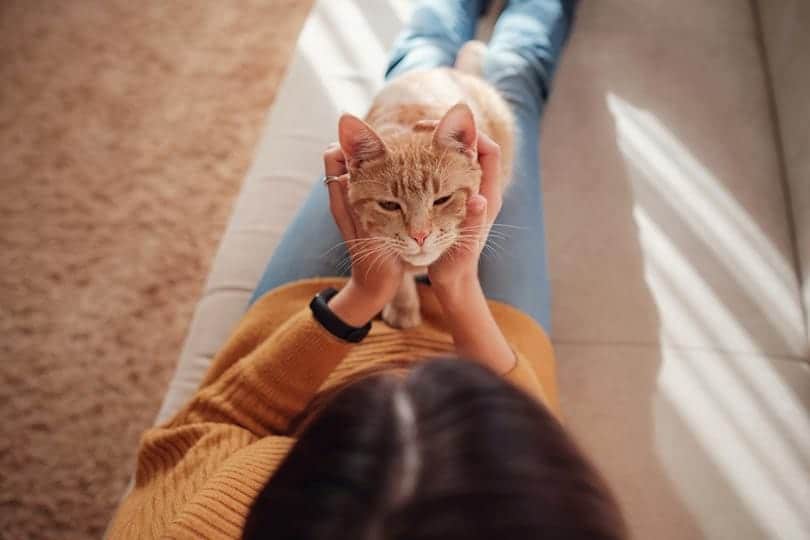
You should easily be able to feel your cat's ribs when gently running your thumbs on their backbone and spreading your hands across the ribcage. Cats at a healthy weight will have a thin layer of fat over their ribs and spine that's not visible but tangible when feeling along their sides.
Tip
Visual Assessment

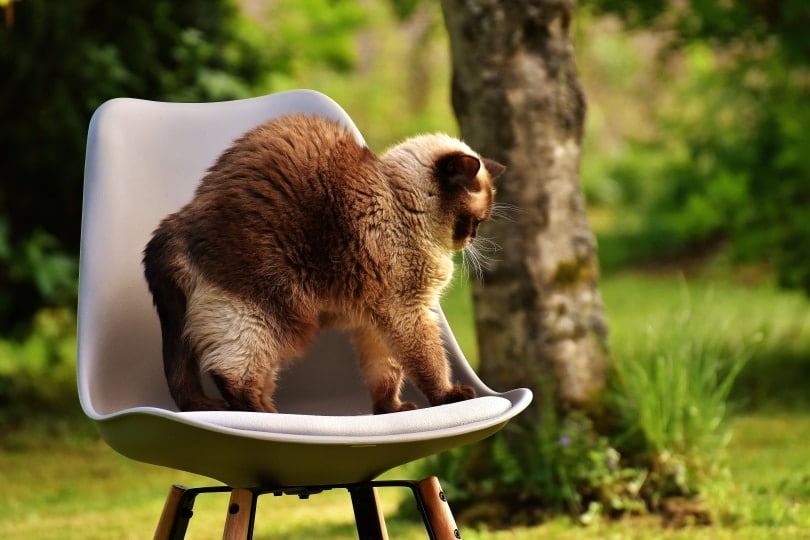
Next, assess your cat from above when they are standing. They should have a visible waist behind their ribs that tapers slightly towards their hips.
From the side, you should be able to see your cat's abdomen tucked up behind their ribcage. Do they have a saggy belly, or does their abdomen slant upward between their ribs and hind legs?
If you are concerned or have questions about your cat's health, you can also speak to a vet from the comfort of your own home to help make a plan. They can determine when an in-clinic vet visit should be made.
Frequently Asked Questions
If my cat has a saggy tummy, does that make them fat?
Not necessarily. Both male and female cats have an abdominal flap along their bellies, known as a primordial pouch. Some pouches are more pronounced than others. Pouch size may have a genetic component, so they can vary from breed to breed and cat to cat. Even the healthiest and leanest cat could have a large pouch.
An overweight cat will have a round-shaped belly and extra padding around their ribs, while those at a healthy weight will have a swinging primordial pouch and a visible indentation at the waist when viewed from above.
How can I reduce my cat's weight?
If your cat is overweight, you and your veterinary team should come up with a weight reduction plan together. Do not put an overweight or obese cat on a diet without first consulting with your vet. They will determine your cat's ideal weight based on their body size and build. From there, they will provide daily caloric needs for your pet to help them lose weight in a healthy manner.
In addition to reducing caloric intake, your vet may recommend an exercise program to help your kitty fit. It may include things as simple as moving their food bowl upstairs or using feeding balls instead of bowls to make them work for their kibble. You'll also want to implement daily play times using interactive toys like laser pointers and feather wands.
Losing weight isn't an easy or quick process for cats, so don't get discouraged if you don't notice any huge changes in your pet's BCS immediately. Cats can safely lose about half a pound monthly. Crash diets are to absolutely be avoided as they can cause serious life-threatening liver failure in cats.

- NO MESS - The 360° tray on this cat food and water bowl set has a raised design to catch and contain stray crumbs and drips. Protect your indoors and floors from wet and messy meals!
- WHISKER FRIENDLY - Shallow and wide metal containers with flat bottoms ensure your kitty can enjoy mealtime free from whisker fatigue!
- CHEW-SAFE MATERIALS - Kittens and cats love chewing on silicone and soft rubber - but it's a choking hazard. Our cat feeding station materials are anti-chew for a 100% safe feeding frenzy!
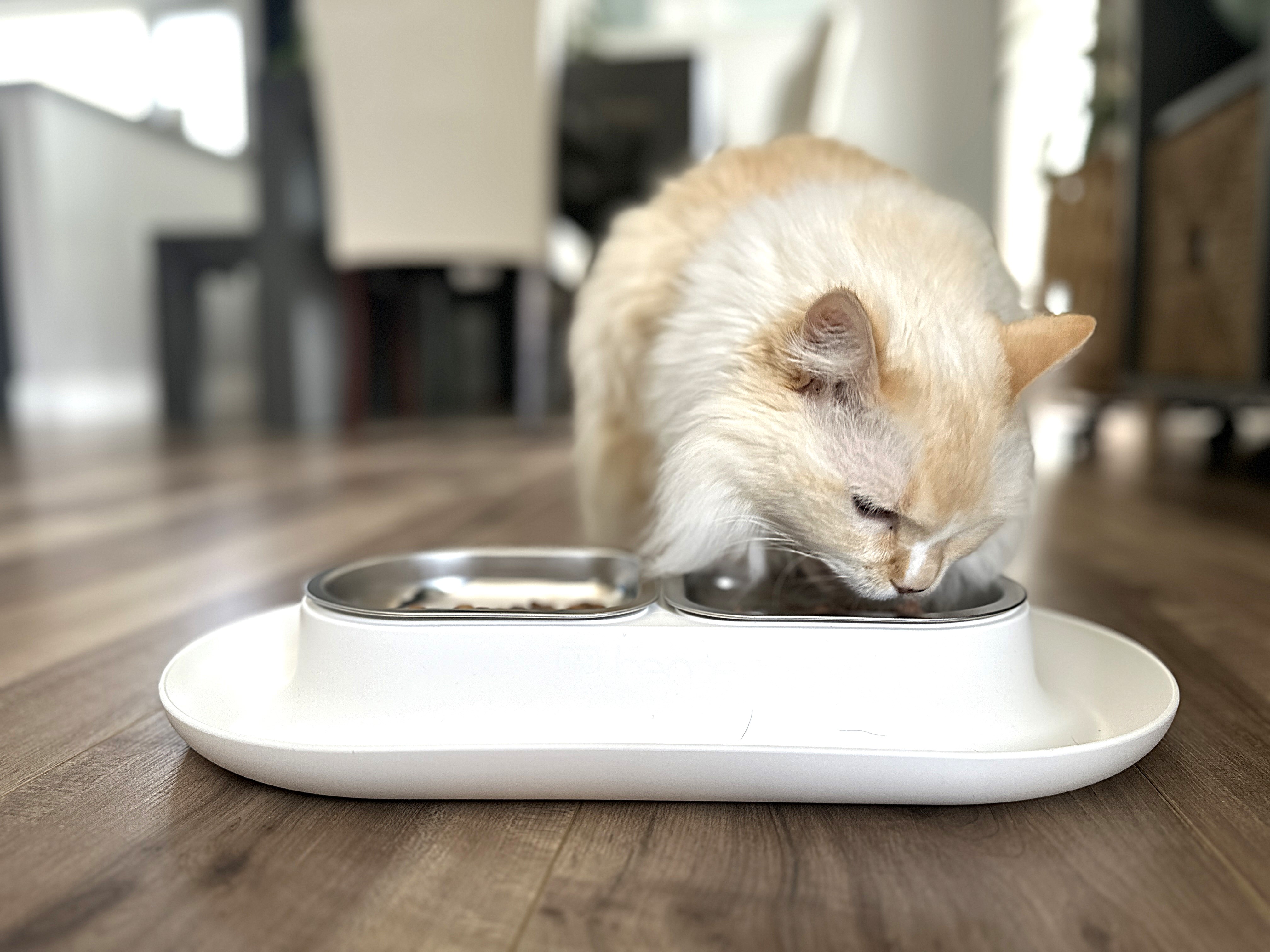
Feeding your cat a high-quality diet is important for keeping them healthy and happy. But it goes beyond the food you choose; the dishes they use also matter. The Hepper NomNom Cat Bowl is our favorite for its unique, five-star design that protects from whisker fatigue and promotes good posture which also aids in better digestion. As an added bonus, it’s beautifully crafted and offers a modern take on the traditional cat bowl that fits seamlessly with all home stylings. Learn more about the NomNom by clicking here.
At Catster, we’ve admired Hepper for many years and decided to take a controlling ownership interest so that we could benefit from the outstanding designs of this cool cat company!
How often should I weigh my pet?
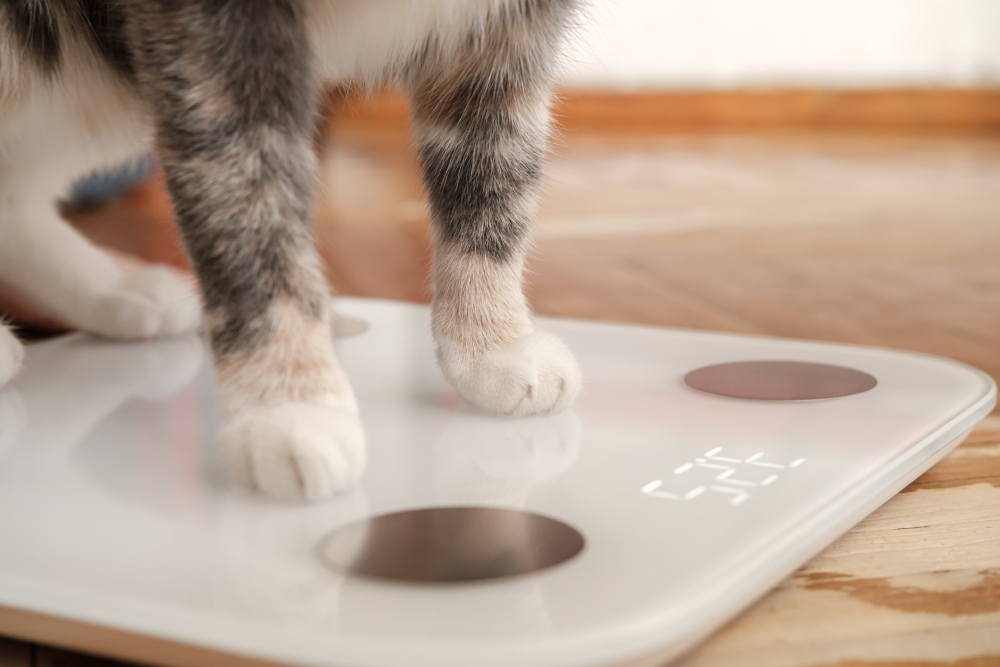
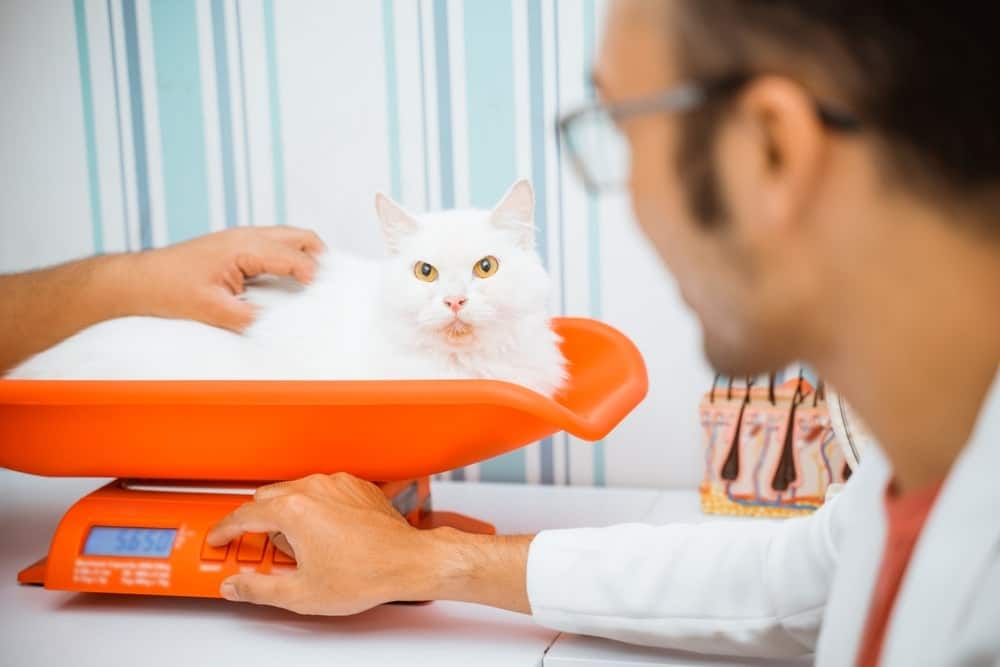
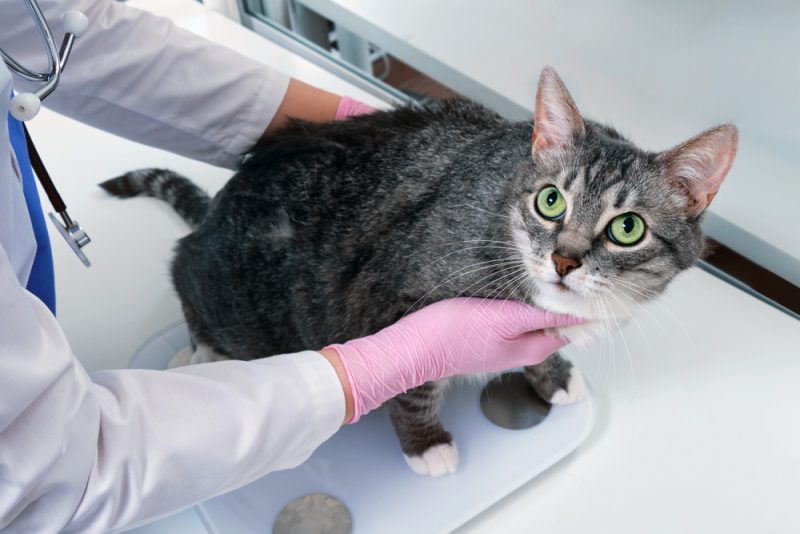
You should weigh or assess your cat’s BCS regularly to keep tabs on their weight. Knowing your pet's baseline will help you catch unwanted weight gain early and address it before it gets out of control. Weigh your cat monthly if they're on a weight-loss diet to keep track of their progress.
A Quick Reference Guide
| Five Point Scale | Nine Point Scale |
|---|---|
| 1/5 – Very thin | 1/9 – Emaciated |
| 2/5 – Underweight | 2/9 – Very thin |
| 3/5 – Ideal weight | 3/9 – Thin |
| 4/5 – Overweight | 4 or 5/9 – Ideal weight |
| 5/5 – Obese | 6/9 – Overweight |
| 7/9 - Heavy | |
| 8/9 – Obese | |
| 9/9 – Severely obese |
Conclusion
The Body Condition Score is a useful tool in determining your cat's body fat level. Since so many health conditions are associated with being overweight and obese, it's important to keep tabs on your cat's weight and body fat level. If you have any concerns about your pet's weight or BCS, don't hesitate to contact your veterinarian for advice.
Featured Image Credit: Beach Creatives, Shutterstock

Expert cat care, straight to your inbox
Vet-reviewed advice, behavior tips, and the best of Catster. Free, and you can unsubscribe anytime.
By signing up, you agree to our Terms & Conditions and Privacy & Cookies Policy.
For Chantelle, writing and animals are the two driving forces in her life. Growing up on the Canadian prairies surrounded by pets, she now shares her home with five cats, two guinea pigs, and a bearded dragon. Chantelle, her husband, and their child pride themselves on being dedicated pet parent, even spending a fortune on wall-mounted cat shelves to provide their cats with an indoor jungle gym. When she's not snuggling with her cats or photographing their humorous moments, Chantelle is exploring the Rocky Mountains, rewatching her favorite Netflix series, and reading up on various random subjects.
Join the conversation
Ask a question, share your story, or send private feedback.