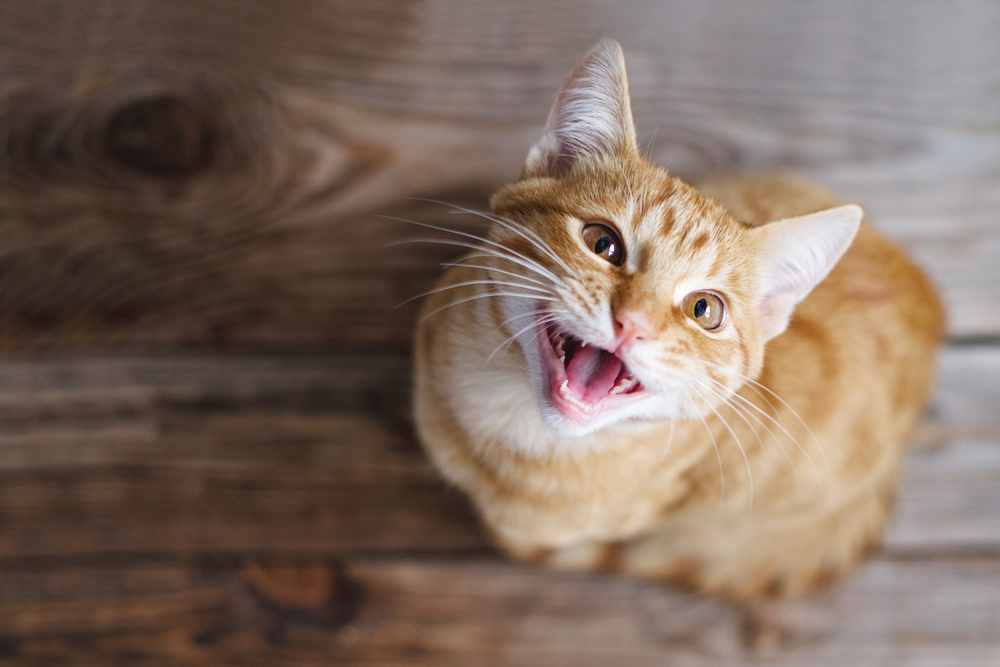
11 Vet-Reviewed Cat Sounds & Their Meanings (With Audio)



Have you ever wondered what your cat is trying to tell you when they purr, meow, or chirp? Our gorgeous domestic cats use a wide range of vocal cues to express their opinions, and some cats are incredibly loud when it comes to letting us know their feelings.
We might not be able to determine what they want, but by identifying some of the different sounds that cats make, as well as what they could mean, you’ll have a much better chance of working out what it is your cat is trying to tell you! Cats also make sounds that can be quite distressing when they are in pain, and it’s essential to recognize them so you can take your cat to your vet immediately.
We’ve rounded up 11 common sounds that cats make and their meanings. Of course, there are exceptions to every rule, but as you become more familiar with the sounds that your cat makes, you’ll soon be an expert at working out whether they’re excited because they saw a bird outside or are reminding you that it’s time for their dinner!
However, keep in mind that many of these sounds are subjective to our human ears and difficult even to distinguish or characterize, so allow a little flexibility when interpreting various cat sounds. Check out the audio links we’ve included, and see which sounds your cat makes the most!

The 11 Cat Sounds and Meanings
1. Meowing
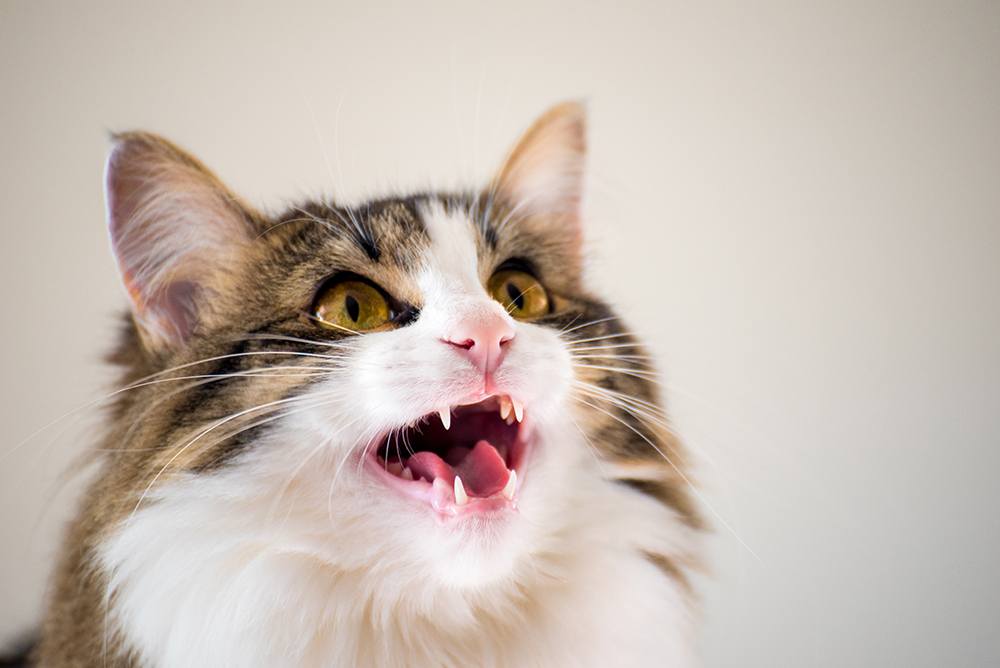
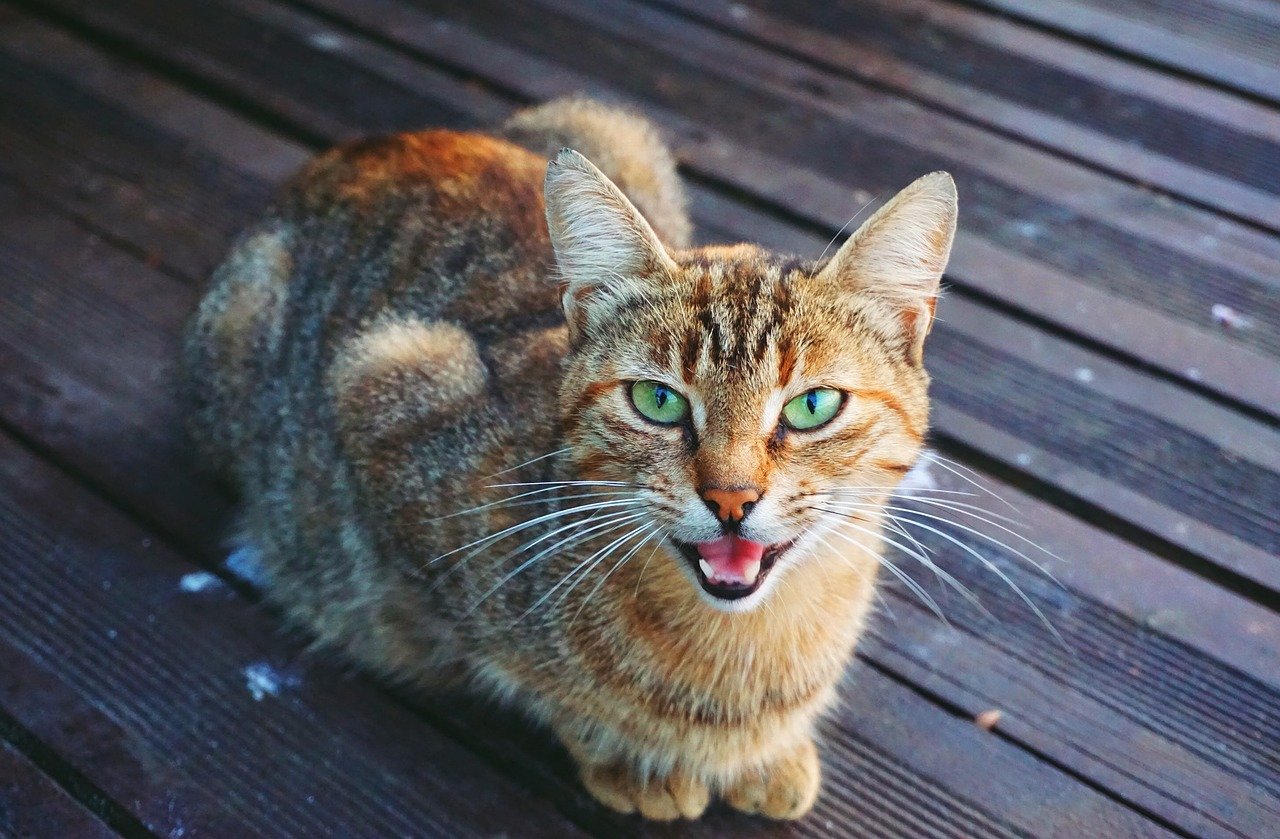
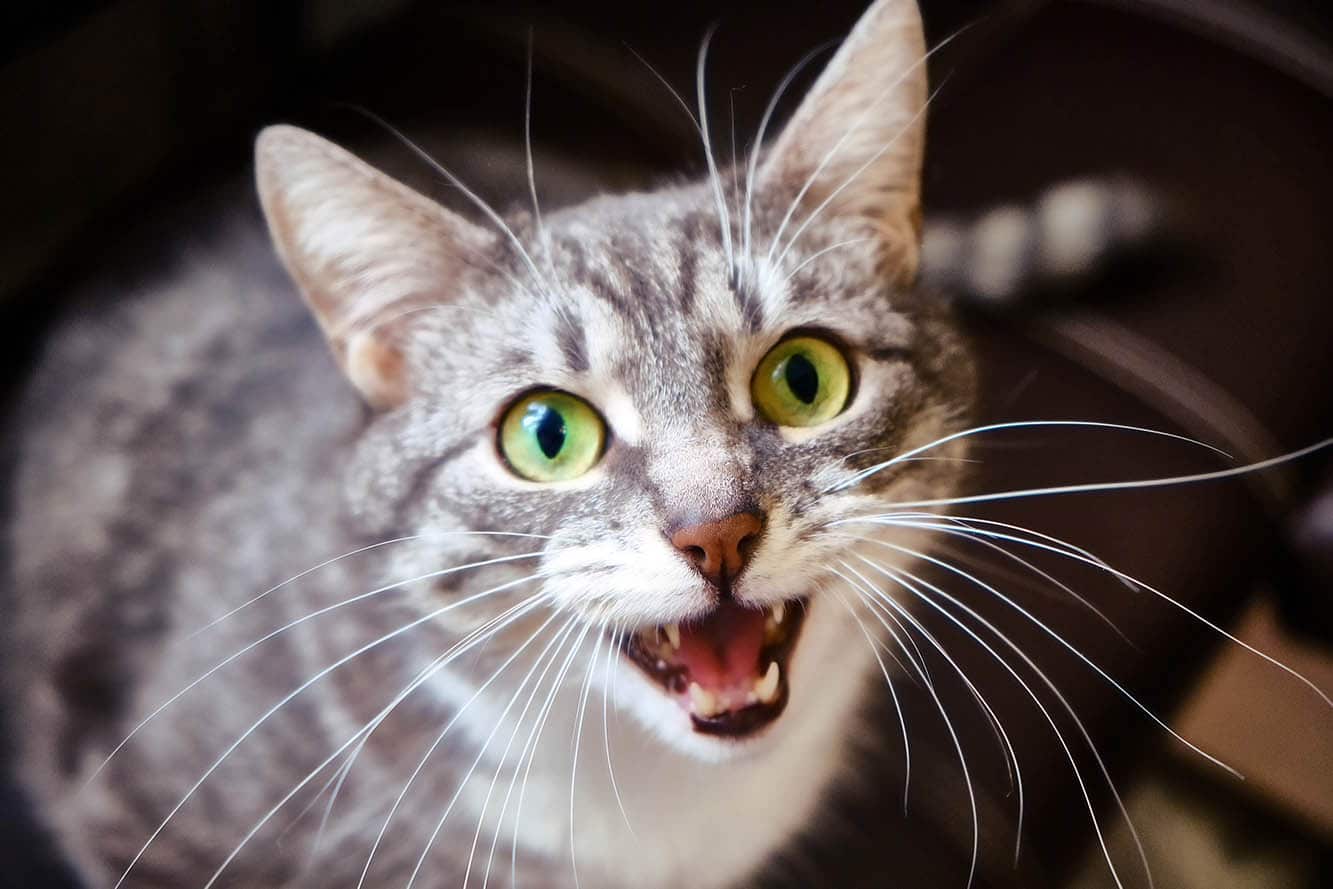
Let’s start with that classic cat sound we all love: the meow! Kittens initially use meow to gain the attention of their owners, and adult cats may meow during social or reproductive contexts. But of course, our clever domestic cats have worked out that meowing at their human owners is an excellent way of letting them know that they need something, whether a bowl of food or a cuddle.
Most cats have a distinctive meow, so it’s easy to tell different cats apart by the sound of their meow.
2. Purring
If you’ve always thought there’s something comforting and relaxing about the sound of your cat’s purr, you’re absolutely right! A cat’s purr has a frequency of roughly 25–30 Hz, and it’s thought that sounds in this range have healing properties. Cats purr when they’re happy, but they also purr as a comforting mechanism or when they’re stressed or in pain, and we benefit from their purrs!
3. Kitten isolation call
This kitten sound is the equivalent of their distress call and is usually only made by kittens under 1 month of age. This high-pitched noise is designed to catch the attention of their mother cat so she can reassure them that she’s still near.
Kittens may also call when they’re hungry or have strayed too far from the bed or any time they need to catch their mother’s attention. However, this short meow may also be used by adult cats to greet their owners.
4. Growling
Growling is a warning to other cats (and people!) to keep their distance. A growling cat may also flatten their ears, puff up their fur, hiss, and swish their tails from side to side. The use of claws and teeth may follow up on this verbal warning if it’s ignored.
Growling is used to signal danger, so if it happens when your cat isn’t interacting with you or another cat, or they are growling when you try to pick them up or touch a specific area of their body, you will need to get a vet to check them out.
5. Chattering
Let’s talk about weird cat noises. There are many adorable clips of cats staring out windows and making this distinctive chattering noise. When most cats chatter, their lower jaw vibrates, which helps give this noise its staccato quality.
Chattering is usually heard when a cat is excited (or frustrated!) or sees a bird outside or something else they want to chase but can’t access.
6. Gurgling
This friendly cat sound can combine elements of a purr, meow, and growl into one noise! Some cats may not use this sound, and others will use it frequently. It can communicate a wider range of emotions than other sounds.
Female cats may gurgle with their kittens, or the sound might be used to say hello to their owners or express happiness. However, some of these cat sounds are anecdotal and may be difficult to properly describe and characterize.
7. Chirping
Many cats will make this short, high-pitched call. Cats may chirp at their owners when they come home after being away for the day or when they’re excited about dinner time. Others may let out a little chirp whenever they see you in the house, and you call them over.
Female cats commonly chirp when they are in the nest or approaching it. Whenever your cat makes this noise, it’s always adorable!
8. Hissing
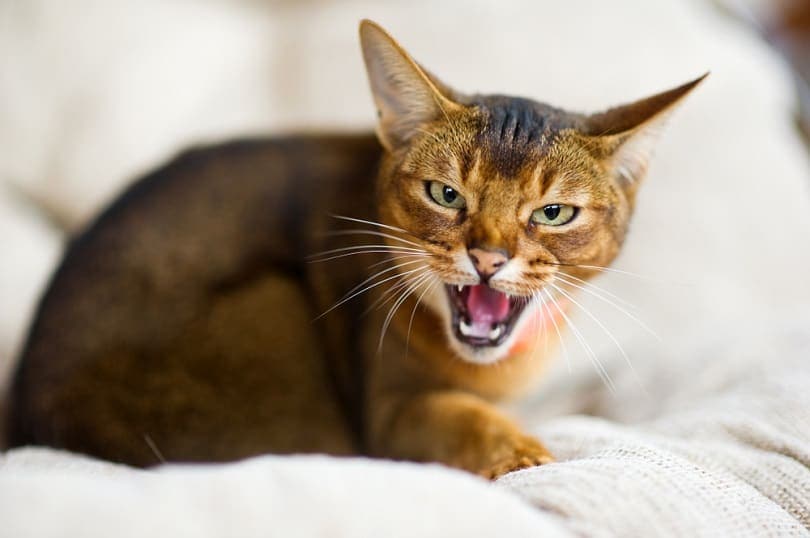
The meaning of this cat sound is more obvious, cats use hissing as a warning to back off for whatever or whoever is bothering them. A cat may also hiss when they are surprised by a potential enemy. Cats may also hiss at each other if playtime has become rough or one cat wakes another up unexpectedly.
They will also hiss at humans if they’ve had enough attention or they’re being subjected to a bath they did not want! If their hissing is ignored, some cats will resort to using their claws and teeth, so it’s a good idea to pay attention when your cat hisses!
9. Moaning
Hearing cats moaning can be a memorable experience; luckily, most cat owners won’t hear their cats making this noise! Cats often moan when they’re starting to fight with another cat, and they do it as a warning before stepping up to physical contact. If neighborhood cats are out at night, you may hear them screaming at each other when their territories cross over.
Cats may moan or scream if they have experienced sudden pain from an injury or illness, so if combined with being distressed, limping, or another negative sign, they will need to see the vet urgently.
10. Yowling
This noise is usually used for cats to communicate with other cats, either when feeling threatened or as a mating call. Its frequency is around 200-600 Hz, and it can last 3-16 seconds.
A yowl can be heard as part of growling, together with moans and hisses.
Related Read: 7 Ways to Help a Cat With Stress: A Vet-Reviewed Guide
11. Caterwaul
Usually, you’ll only hear a female cat in heat making this cat call sound designed to attract males. If your female cat is spayed, she will unlikely make this noise. If your unspayed female cat starts yowling, it’s a sign that she’s in heat, and you might want to keep her safely inside for a few days!
Cats may also caterwaul as a sign of warning.
Conclusion
If you have a cat, you’ll likely notice one or a combination of these 11 sounds during your time with them. While they’re usually nothing to worry about, keep a close eye on them, as sometimes, cat sounds can indicate something is wrong.
See Also:
How to Speak Cat: Talking to Your Kitty in a Language They’ll Understand
Why Is My Cat Squeaking Instead of Meowing? (Vet Explained Cat Communication)
Sources
Featured Image Credit: Jessie Feross, Pixabay

Expert cat care, straight to your inbox
Vet-reviewed advice, behavior tips, and the best of Catster. Free, and you can unsubscribe anytime.
By signing up, you agree to our Terms & Conditions and Privacy & Cookies Policy.
Christian started writing for a local newspaper as a teenager, and he's been involved in the publishing industry for most of his adult life. Combining his love of writing with a passion for animals, he is currently the Director of Editorial at Pangolia and the Editor-in-Chief at Catster.
Christian lives in the Philippines with his wife, son, and four rescue cats: Trixie, Chloe, Sparky, and Chopper.
Join the conversation
Ask a question, share your story, or send private feedback.